
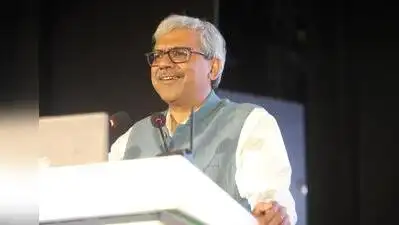
ICMR director general Rajiv Bahl in Kolkata
Kolkata: The country might get its dengue vaccine by the end of next year if all goes well with ongoing follow-up on volunteers participating on the phase 3 trial of the home-grown vaccine. ICMR director general Rajiv Bahl, who was in Kolkata on Sunday, said this trial is on in 20 institutes across the country. “We are following up on the little above 13,000 volunteers for this randomised trial where for every two volunteers who got the vaccine one got the placebo.
We are hopeful of unblinding the code by next year end,” said Bahl on the sidelines the 4th edition of the Dilip Mahalanabis Oration hosted by the Liver Foundation West Bengal (LFWB). This fantastic model got the attention of UNICEF India,” said Bahl. We thought of having an annual oration in his memory,” said haepalogist and public health actvitist Abhjit Chowdhury, mentor to the foundation.
We have completed almost a year of follow-up. “Another pioneering initiative by Mahalanabis was the setting up of the sick newborn care unit (SNCU) in a Purulia hospital with Arun Singh and others, along with the Society for Applied Studies. Bahl spoke about the journey from Mahalanabis’s SNCU to his Mother Newborn Care Unit (MNCU), another revolutionary model that practices zero-separation between mothers and their preterm or sick newborns where Bahl played a leading role in the research. “We believe in simplistic science that benefits humanity to the maximum extent. Mahalanabis showed the world a simple way that is now saving more livesthan many great discoveries.
DengiAll, India’s first indigenous, single-dose, dengue vaccine is expected to work against all four strains of dengue prevalent in the country. Since the number of dengue cases is generally low in India this year, the clinical trial team might have to wait longer to unblind the study result. Bahl, a paediatrician, also spoke on Kangaroo Mother Care (KMC) during the oration. KMC is a proven method of newborn care, in which the baby is held against the mother’s bare chest for skin-to-skin contact. Bahl has led landmark research in the efficacy of this model in reducing infant mortality.