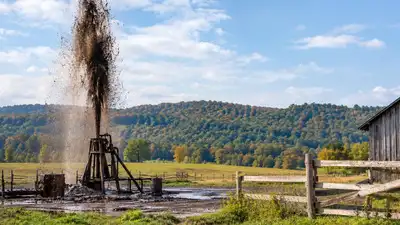
AI Representation: A historic-style oil gusher erupts on a West Virginia farm, illustrating the oil discovery that brought unexpected wealth to a farmer who spent much of the proceeds on a purebred bull. Image credits: Chatgpt
What the December 27, 1906, Bamberg Herald page confirms An edition of the Bamberg Herald of December 27, 1906 has been digitised by the University of South Carolina libraries. The Bamberg Herald’s copy of the story described the purchase of a bull worth $1,500. Because of oil, drilling, and poor farmland, the story said that a number of people in West Virginia had become rich.
Under the heading “After Oil Was Struck!” is a story reprinted from a New York paper. During the first decade of the 20th century, gas and oil businesses entered into drilling leases with individual landowners in northern and central parts of West Virginia. Land was granted access to such business entities, which would benefit from the results of drilling, if any. The people familiar with the practice of leasing the lands for drilling in the area of interest were rural families. One such newspaper described how landowners spent their sudden oil windfalls, a topic that attracted public interest at the time. The story also mentions a man who wanted a pair of patent leather shoes and a father who bought items with his sons on behalf of their mother.
It is said to have been $2,000. However, this isn’t confirmed by the available text of 1906. Appalachian oil output of 35,229,949 barrels in 1897
The page doesn’t reveal anything regarding the name of the farmer or the price he got for the gusher.
The USGS’s Mineral Resources of the United States , 1897 lists 35,229,949 barrels for the Appalachian field for that year. Thus, oil was already an established industry in the region, nine years before the 1906 article. West Virginia passes Pennsylvania and reaches an oil production peak of 16 million barrels West Virginia’s oil production surpassed Pennsylvania’s in 1898, as the West Virginia Encyclopedia records. In 1906, the year of the newspaper article, the state produced more natural gas than any other state. Image credits: Wikimedia Commons The encyclopedia puts it at 18 years, which would run to 1924, while the West Virginia Geological and Economic Survey’s history of the state’s mineral industries gives 1906 to 1917, a span of 12 calendar years and a seven-year gap between the two accounts. The survey gives the peak of the state’s oil production as 16 million barrels in 1900, while the encyclopedia dates the same peak to 1901. USGS volume on 1906 mineral resources The USGS lists Mineral Resources of the United States, 1906 , written by David T. Day and published in 1907, as the volume in the same annual series that covers the year of the newspaper story. The detail that turned the anecdote into an interesting story was the contrast between the description of the farm that was said to be barren and the $1,500 bull.
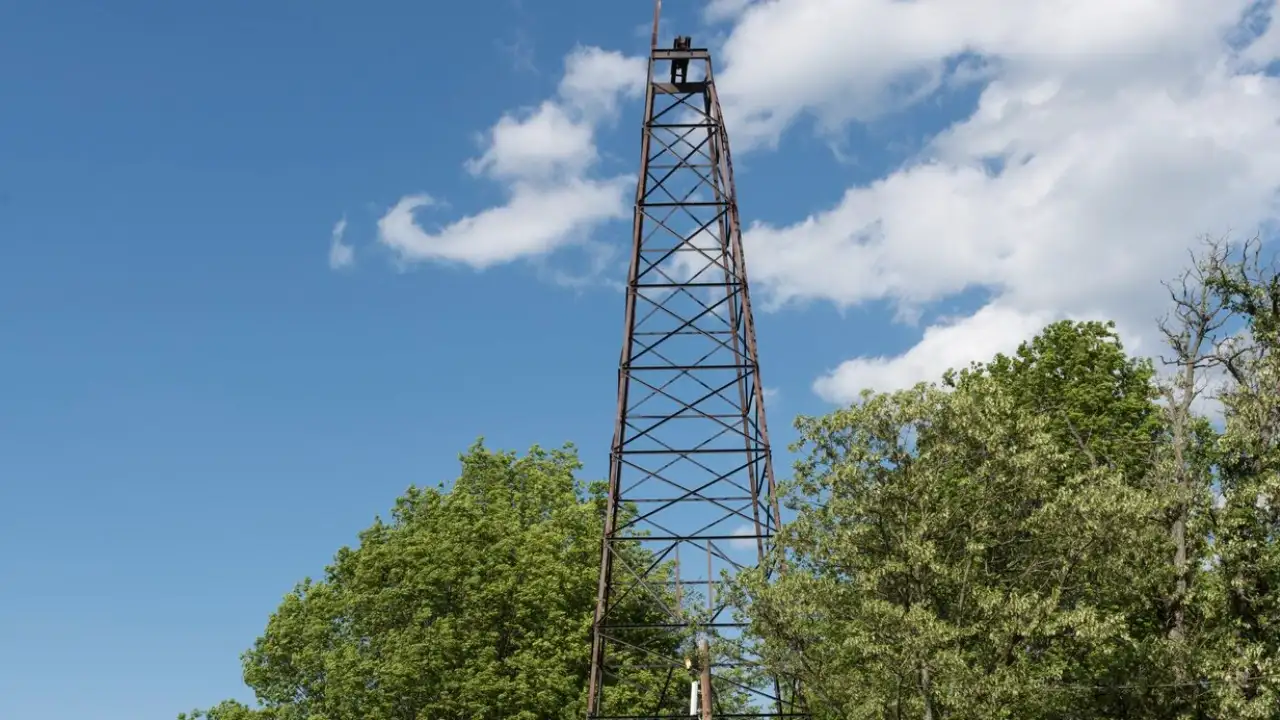
The report places the Appalachian field across southwest New York, Pennsylvania and West Virginia. Sources differ on how long this lead lasted. An oil derrick at Sistersville, West Virginia. Whether the farmer bought the bull as an investment in breeding or as a way of showing off is not known. However, the column compared the bull to the shoes and the axe. You use AI every day. Now get your AI Quotient. Take the AIQ test.