
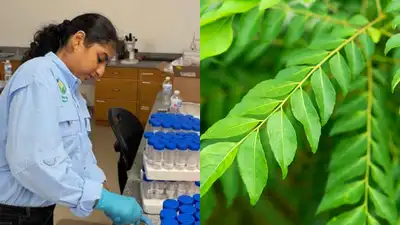
The research was started by Aglave as a freshman and took over 300 hours to complete, often working two hours in the laboratory every other day after school.
Aglave was 17 when she set out to attack that fight on multiple fronts at once. Her work has earned her a $50,000 scholarship as a 2026 Davidson Fellow. For Tanishka Aglave, citrus greening isn’t simply a problem that exists in textbooks or agricultural research papers. She watched it take a toll on Florida citrus growers, including her own family, growing up. The disease has destroyed groves across the state, making what used to be a hallmark of Florida agriculture a hard fight for farmers. The IB senior at Strawberry Crest High School has come up with a three-pronged approach, which includes a treatment using curry leaves, a localized system for steam therapy, and an artificial intelligence tool to help growers track the disease, states an online report by the Davidson Institute website. The third part of the project addresses another issue: how do you know if a treatment is really working. they are not always practical for a farmer managing a large grove While laboratory methods such as qPCR and ELISA can provide detailed information about plant health. Aglave created a web-based computer vision application that uses YOLOv11 and analyzes photos of citrus leaves to measure the visible symptoms of disease. That might provide farmers with an easier way to track trees in the course of normal photography, bridging laboratory research and everyday agricultural decision making.
The research was started by Aglave as a freshman and took over 300 hours to complete, often working two hours in the laboratory every other day after school. Her course work in biology, chemistry, mathematics, statistics and biotechnology provided the foundation, and much of the specialized laboratory work, coding and computer-aided design required independent learning. Her research has earned top awards at the Regeneron International Science and Engineering Fair and has been published in the American Phytopathological Society’s journal, Plant Disease. Outside the lab, Aglave seeks to raise climate literacy and awareness of research among young people. She hopes to pursue a career in the biological sciences and continue developing solutions that have practical benefits to communities.