
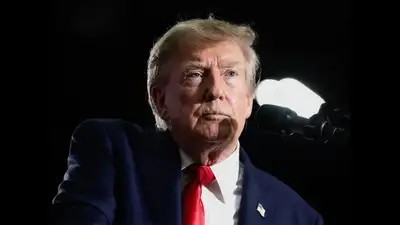
US President Trump
Knight, the 1977 D.C. The timing of the ban appears linked to increasingly critical coverage of the President and his family from sections of the media, including a Bloomberg’s review of financial disclosures found that Trump or his money managers made nearly 28,700 securities transactions between his second inauguration and June 30, 2026, more than all members of Congress collectively. Because of the journalist’s reporting, the court held that while the government need not open the White House to the press, once it establishes press facilities for bona fide journalists, access cannot be denied arbitrarily or.
Then ProPublica reported that Russian businessman Umar Kremlev, who has ties to the Putin government, financed hundreds of thousands of dollars of expenses surrounding Donald Trump Jr.
Seth Stern at the Freedom of the Press Foundation put it more bluntly, saying it is “hard to imagine a dumber move. ” )) There is a peculiar paradox at the heart of Trump’s relationship with journalists. Legally, the White House is not obliged to turn the Oval Office into a public-access newsroom. The principle dates to Sherrill v. Circuit case involving a journalist denied a White House press pass. It also required notice, an opportunity to rebut the reasons for denial and a written decision. More recently though, the DC Circuit court has described the White House press area as a nonpublic forum, which gives the administration substantial discretion over access, but restrictions must still be reasonable and viewpoint-neutral. In other words: the president can control access; but he cannot necessarily control access by deciding who writes nice things about him — something Trump transparently desires. ((White House Correspondents’ Association President Jacqui Heinrich put it more formally: “The Constitution protects the freedom of the press from government interference. That protection does not depend on whether the president likes a news organization’s coverage, agrees with its reporting, or approves of the questions its journalists ask. He is arguably the most voluble and media-saturated president in U.S history, calling reporters into the Oval Office frequently, conducting impromptu interviews, staging gaggles aboard Air Force One, and posting constantly on social media. TV cameras are his oxygen. ‘s Bahamas wedding celebrations. The U.S media has also become increasingly skeptical of the claims from Trump and his administration on the Iran war, detailing fiascos that the Pentagon has not disclosed.
Last November, when Bloomberg correspondent Catherine Lucey asked Trump about Jeffrey Epstein’s emails aboard Air Force One, he pointed at her and said: “Quiet, piggy! He has also called female reporters “obnoxious,” made gratuitous personal comments about their mannerisms, and more recently singled out NYT’s Maggie Haberman, calling her “Maggot Hagerman” The White House defended his language as evidence of his supposedly frank relationship with reporters.