
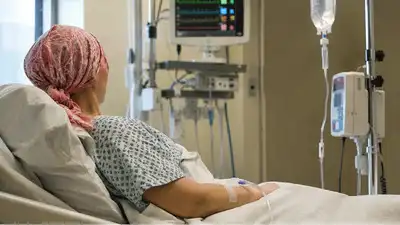
A Pennsylvania woman was treated for breast cancer for 13 months before doctors diagnosed a rare, aggressive lymphoma. (AI image)
Tanya Smith died in January 2019, and her family pursued a medical malpractice lawsuit, alleging that doctors had failed to investigate conflicting test results and delayed her correct treatment. The case was dismissed during a jury trial, but on October 29, the Pennsylvania Supreme Court upheld a ruling allowing the family’s claims to be heard by a jury. During a second trial in April 2022, the judge dismissed the case after concluding that the family had not presented sufficient evidence linking the alleged negligence to Smith’s harm. A Pennsylvania appeals court overturned that decision in March 2024 and ordered a new trial. In its October 29 judgment, the Supreme Court agreed that the family’s evidence was sufficient for a jury to consider whether the alleged failure to investigate the diagnosis increased Smith’s risk of harm.
Because subsequent investigations did not support breast cancer, he testified that Kannarkatt should have questioned the initial diagnosis. Because the jury could not agree, the family’s first trial in October 2021 ended without a verdict. A Pennsylvania woman who underwent treatment for breast cancer for more than a year was later found to have a rare and aggressive form of lymphoma. Dr Gerald Goldklang, an expert called by the family, explained that oncologists must consider pathology results alongside clinical examinations and imaging tests. The court explained that medical malpractice cases involving delayed treatment do not always require proof that a patient would certainly have survived with different care. Expert evidence showing that alleged negligence increased the risk of harm can be sufficient to allow a jury to decide the matter. You use AI every day. Now get your AI Quotient. Take the AIQ test.
Kannarkatt and Cancer Care Associates challenged the ruling before the state’s Supreme Court.
Asked whether the 13-month delay had deprived Smith of a substantially better chance of living longer, Soiffer replied, “I think it did, yes. Because of its aggressive nature and rarity, another expert, Dr Robert Soiffer, explained that ALK-positive large B-cell lymphoma was particularly difficult to treat.
Earlier lymphoma-directed treatment, he said, could have offered Smith a better opportunity for remission and a successful transplant. He testified that cancers receiving inadequate treatment can continue growing, develop mutations and become resistant to chemotherapy.
However, he acknowledged that he could not predict exactly how long Smith would have survived with earlier treatment.
The dispute began in March 2017, when Smith visited an oncological surgeon at WellSpan York Hospital after an enlarged lymph node was discovered in her armpit during treatment for shoulder pain, as per the case details on Justia . US election results: Flooding forces relocation of 21 polling sites in Florida US House election: Democrats need 3-seat gain to end Republican majority US Senate election: Can Democrats flip the Senate as Trump faces crucial test? Despite these findings, Smith began treatment for breast cancer under oncologist Dr Annie Kannarkatt at Cancer Care Associates of York on March 21, 2017. By November 2017, another PET scan showed that the cancer had spread considerably. The disease later affected her abdomen, leading to the removal of her gallbladder in March 2018. When the medical team re-examined tissue collected in March 2017, it matched the samples obtained a year later. She died on January 6, 2019.
A biopsy was performed, and pathologist Dr John Wright reported findings compatible with metastatic breast cancer, suggesting that cancer originating in the breast had spread to the lymph node. However, further examinations raised questions about that diagnosis. A CT scan, PET scan, mammogram and ultrasound failed to identify a primary tumour or show that the cancer had originated in the breast. The CT and PET scans also listed lymphoma as a possible diagnosis. The treatment included chemotherapy and radiation therapy. chemotherapy produced little or no improvement in her overall condition Although the areas receiving radiation showed improvement. A biopsy of cancerous tissue removed during Smith’s gallbladder surgery changed the course of her diagnosis. Doctors identified ALK-positive large B-cell lymphoma, an extremely rare and aggressive cancer. This established that Smith had been suffering from lymphoma from the beginning, rather than metastatic breast cancer. Following the revised diagnosis, Smith transferred to Milton S. Hershey Medical Center, where oncologist Dr Seema Naik began lymphoma-directed chemotherapy. The initial treatment produced little improvement. Doctors then administered salvage chemotherapy, which reduced the amount of cancer enough for Smith to undergo a stem cell transplant. However, the transplant was unsuccessful, and her cancer returned. Before her death, Smith and her husband, Marvin Smith, had filed a lawsuit against Kannarkatt and Cancer Care Associates. They alleged that the oncologist had failed to confirm the original diagnosis, consult the pathology team about conflicting findings and provide appropriate chemotherapy. During the proceedings, medical experts examined whether the delay had reduced Smith’s chances of surviving longer.