
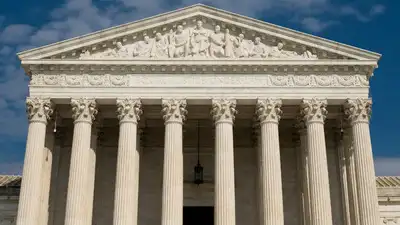
The administration had asked the Supreme Court to intervene after a lower court ruling disrupted its ability to carry out what it calls “third-country” removals
The apparent 6-3 emergency order lifted a lower court requirement that migrants be given adequate notice and a chance to raise concerns that they could face persecution or torture in the countries where they were being sent. Officials said the order had forced the cancellation of a deportation flight carrying around 70 people to three countries.
The administration had asked the Supreme Court to intervene after a lower court ruling disrupted its ability to carry out what it calls “third-country” removals. The court did not explain its reasoning, as is typical with emergency orders. Court to decide policy’s legality
The US Supreme Court on Tuesday allowed President Donald Trump’s administration to temporarily resume deporting migrants to countries other than their own, without giving them an opportunity to challenge their removal on human rights grounds.
The Supreme Court will examine several questions when it hears the case in December. These include whether the administration’s third-country deportation policy is lawful, whether the lower court had jurisdiction to hear the case and whether it had authority to impose a nationwide restriction. She also stressed that Tuesday’s decision did not determine whether the policy itself was legal. The Supreme Court will now consider that question on an expedited schedule.