
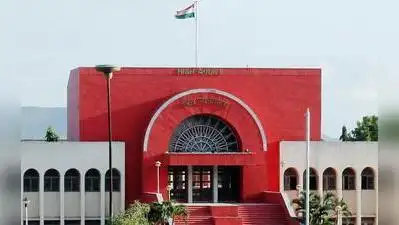
Aurangabad bench of Bombay high court
Chhatrapati Sambhajinagar : Aurangabad bench of Bombay high court has upheld state govt’s decision to cancel Teachers Eligibility Test (TET) 2018 and 2019 results of candidates whose mark sheets were found to be tampered with or inflated. The court granted the authorities time till Dec 31, 2027, to initiate fresh penal proceedings after issuing notices and giving affected candidates an opportunity to be heard. The TET 2019 examination was conducted online on Jan 19, 2020, with over 3 lakh candidates appearing. While 16,705 candidates were declared successful, a subsequent police probe linked to Mhada recruitment scam revealed widespread manipulation of marks. Investigators found that marks of nearly 7,880 candidates had been altered. In TET 2018, around 1,700 of the 9,677 successful candidates were similarly found to have inflated scores. Citing one instance where a candidate’s score allegedly rose from 64 to 82, the bench said the petitioners had effectively admitted that tampering had taken place.
It ruled that cancellation of the results amounted to a corrective or remedial measure rather than a punitive action and said courts should refrain from interfering in academic decisions taken by expert bodies. Observing that such litigants had not approached the court with “clean hands” and had attempted to “play a fraud on the court”, it dismissed three petitions solely on that ground. The court, however, set aside education department’s decision to permanently debar such candidates, holding that it violated the principles of natural justice. Enlightened human beings can be created by teachers”. It quoted Mustafa Kemal Atatürk’s famous line comparing a teacher to a candle that consumes itself to light the way for others. The court also referred to the example of a zilla parishad teacher who walks 5km daily to teach two students in a remote hamlet and concluded by citing Abraham Lincoln’s celebrated letter to his son’s teacher. HC noted that the state had offered candidates an opportunity to compare their answer sheets with model answers, but none availed themselves of it. Significantly, the court observed that not a single petitioner claimed to have actually secured the marks reflected in the disputed mark sheets. Rejecting arguments that a pre-decisional hearing was necessary before cancelling the results, the court held that such a requirement would be impractical in cases involving large-scale malpractice. The bench also took a dim view of some petitioners who failed to disclose that their statements had already been recorded by police.