“We are navigating these financial challenges through early planning, stronger community fundraising and structured sponsorship drives this year,” says Pratyush Banerjee, general secretary, Sujan – Bengali Association of Ireland in Dublin. Conflicts have been pushing up the cost of logistics across the world in recent months. But that hasn’t stopped probashi Bengalis from dreaming big when it comes to Durga Puja . Across continents, Bengali associations are finding new ways to make the annual celebration feel rooted yet relevant.
We, Trinayani, were the only organization who used to do Theme Puja in the state of New Jersey, but now from this year 3 more big community pujas have started theme driven pujas in New Jersey. Theme-driven Durga Pujas are gaining ground among Bengali communities overseas, with organisers saying celebrations are increasingly using art, storytelling and local participation to explore contemporary ideas of identity and belonging. In New Jersey, what was once largely limited to one community is now being adopted by several larger pujas, while smaller community and household celebrations are also experimenting with themes. “Probashi pujas are also leaning towards theme driven pujas.
To manage these pressures, we have made practical adjustments, including deciding not to fly in traditional dhaakis from India this year due to the high travel costs.
Overall, we are navigating these financial challenges through early planning, stronger community fundraising and structured sponsorship drives,” says Pratyush Banerjee. With expenses rising across venues, decorations, photography and logistics, overseas Bengali communities are having to rethink how they organise Puja celebrations. In Dublin, organisers say higher transportation costs have also affected the movement of idols and other materials from Kolkata, prompting them to make practical changes to keep the celebrations financially sustainable. “Yes, costs have increased significantly across all fronts this year. The primary pressures have come from venue and operational expenses, with community halls, photography and decorations becoming considerably more expensive. Freight and logistics have also been affected by rising global fuel costs, making both the international transportation of the idol from Kolkata to Dublin and local logistics before and after the event more expensive.
Because their parents do, we cannot assume that they will automatically connect with Durga Puja simply.
This will be the fourth consecutive year of that tradition,” says Somnath Dana, secretary, Bengali Association of Gothenburg (BAG). Now I think communities are becoming much more comfortable asking, what does a Bengali Puja in Seattle, New Jersey, London or Singapore actually look like?” says Priyanka Ganguly, founder, Oikatan, Bengali Community of Southern Seattle. Furthermore, to encourage broader participation, students are eligible for additional discounts on our events,” says Pratyush Banerjee, general secretary, Sujan – Bengali Association of Ireland, Dublin. > Among the Bengalis, Maa Durga is also welcomed as a daughter who is coming back home with her children; for us who live abroad, Puja has just as great an emotional significance since it brings home to us the feeling of being with our families when we are unable to return
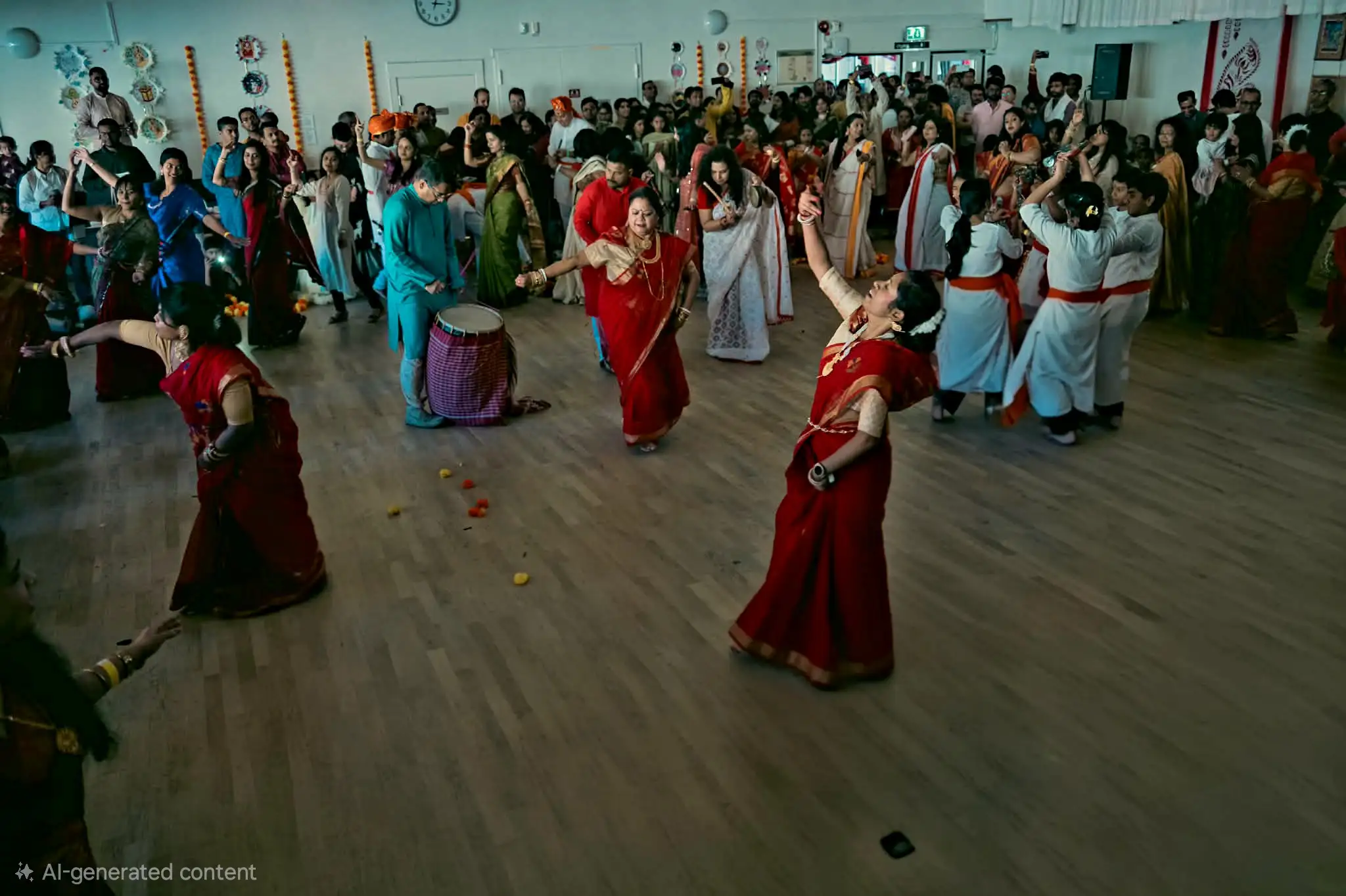
In Sweden, the Bengali Association of Gothenburg is taking a similar approach, using its Puja theme to explore ideas of home, memory and belonging while keeping the production community-led. “Probashi Pujas are no longer only religious gatherings; they have also become spaces where communities celebrate art, culture, memory, and identity. At BAG, we have always tried to use our Puja to tell a story about Bengal in a way that feels meaningful here in Sweden. This year’s theme is ‘Beyond the Gateways of Bengal’. It looks at the idea of doors and gateways in Bengali homes—not just as physical entrances, but as symbols of welcome, memory, belonging, and new beginnings. The decorations are being made entirely by volunteers using recycled materials. We are also continuing something very close to our hearts: our in-house women priests conducting the Puja rituals. Across Bengali communities abroad, the focus is increasingly shifting from simply recreating the Puja of Kolkata to building traditions that younger generations can actively claim as their own. With many children growing up outside Bengal, organisers say participation — through volunteering, performances, rituals and community activities — is becoming key to keeping the connection alive. “Many of our children are growing up in the United States. Their relationship with Bengal is very different from ours. So the idea is to make them participants, not spectators. They perform, volunteer, take part in activities and spend time with other Bengali children. I often say our children don’t need us to recreate Bengal exactly as we remember it. They need us to help them understand why Bengal matters to them. For the first generation, Durga Puja is often connected to memories of home. For the next generation, we have to help them create their own memories around it. Otherwise, the tradition will not really become theirs. I think one of the most interesting changes is that Probashi Pujas are developing their own local identities. There was probably a time when the aspiration was to recreate Kolkata as closely as possible. The same emphasis on youth participation is visible in Ireland, where organisers are creating multiple entry points for younger members to engage with the festival beyond simply attending the celebrations. “We place a major focus on youth involvement to ensure our traditions remain vibrant. The next generation is actively encouraged to volunteer, assist in performing rituals, and participate in cultural performances ranging from music and dance to recitations. Through events like Anandamela — our vibrant mela featuring food, art, and crafts — and interactive volunteer roles, younger members gain hands-on experience and a strong connection to their heritage.