
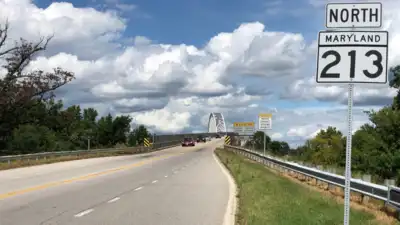
Route 213 overpass | Wikimedia Commons
Maryland used about 60,000 tons of Class F coal fly ash in 1993 and 1994, to build highway embankments for the Route 213 overpass over Route 301 on Maryland’s Eastern Shore. The groundwater measurements collected in May, June and July 1999 showed no discernible impact on groundwater quality at the site. The Federal Highway Administration’s national records list the Maryland Route 213 project as a 1993 fly ash embankment application, with its database recording the project at 91,000 metric tons, which is equivalent to about 100,000 U.S. tons, a figure that differs from the 60,000 tons of Class F fly ash identified in the EPA case study for the 1993-94 work. The EPA’s assessment found that the constituents measured in the fly ash pore water were being attenuated in the soil and groundwater beneath the embankments, and the groundwater data available from the 1999 sampling period showed no discernible impact at the site.
The Route 213 overpass therefore became a documented field case involving both large-scale use of coal fly ash and detailed environmental monitoring. The EPA’s case study reported that trace elements and major ions were present at elevated concentrations in the pore water inside the fly ash fill, which indicated that leachate was forming within the material. The material came from Baltimore Gas and Electric and Delmarva Power plants, and several years later, state researchers tested groundwater around the embankment and found no discernible impact on groundwater quality at the site. The groundwater beneath the embankment was different, where the data showed that the constituents were being attenuated in the underlying soil and groundwater. Fly ash could be compacted into structural fill for highway embankments, which gave transportation agencies another material for large earthwork projects. The ash was placed beneath a working highway, while researchers tracked its physical and chemical behavior around the embankment.
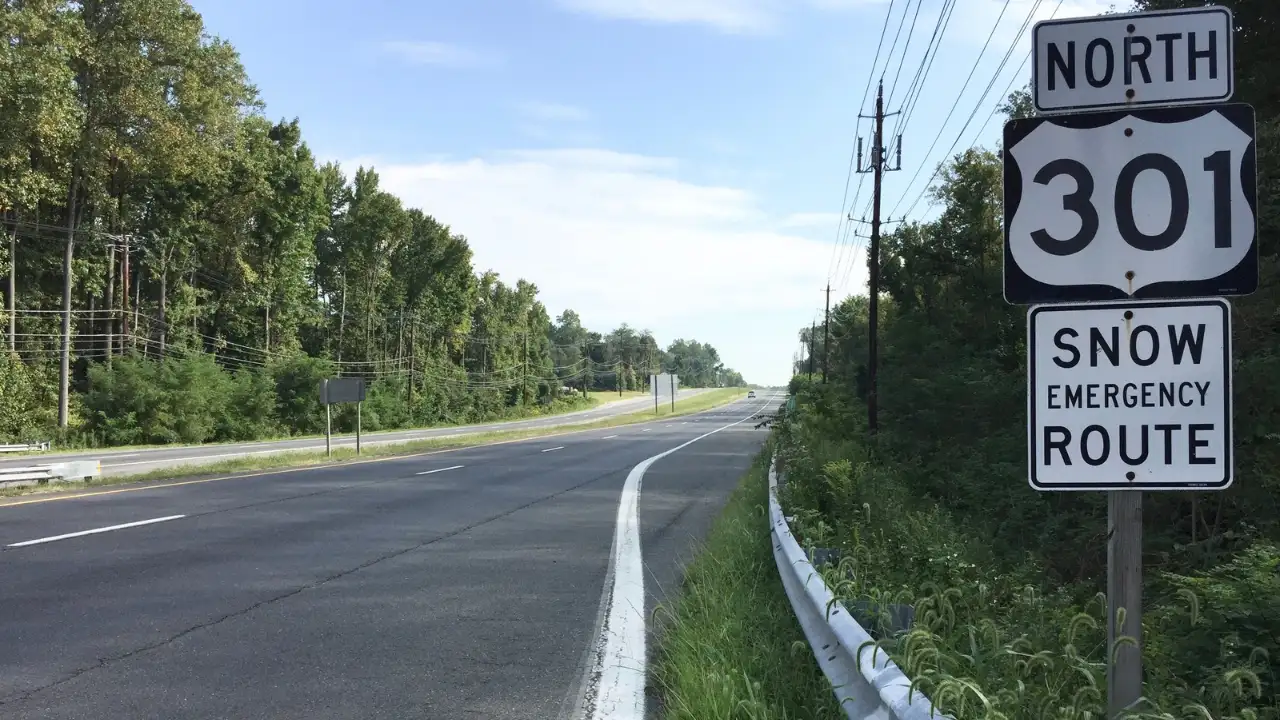
The ash itself was placed and compacted in 8-inch lifts. The fly ash was moistened to about 20% before compaction, and the finished fill was covered with two feet of sandy clay. A Maryland Department of the Environment fact sheet lists about 60,000 tons of fly ash at the U.S. Route 50/MD 213 overpass in Centreville, with about 40,000 tons coming from Delmarva Power’s Indian River plant in southern Delaware and about 20,000 tons coming from the Brandon Shores Power Plant that was operated by Baltimore Gas and Electric. The Maryland Department of Natural Resources Power Plant Research Program began a field study at the site in March 1999, where researchers installed lysimeters and monitored wells and soil-moisture probes in and beneath the fly ash fill.
The fly ash was used as structural fill for the highway embankments near Centreville, and Maryland’s Power Plant Research Program later studied the site as part of a state effort to examine the use of coal combustion products in construction. A base of silty sand was placed first, followed by sandy-clay berms along the sides of the fly ash. Sections beneath the roadway received a stone base and asphalt pavement. Samples were collected from pore water and groundwater, which the researchers tested for dissolved trace elements, major ions and other chemical indicators.