

Representative image of a road construction. (Image Credits: Pexels)
Because fibre could potentially reduce flexural strength and water stability, when different sizes of fibres were unevenly distributed and could form rod-like stacks, however, the study didn’t establish that every increase in recycled fibre yielded an improvement across all properties. This meant that when designing the asphalt mixture, both the fibre content and particle-size range needed to be considered. You use AI every day. Now get your AI Quotient. Take the AIQ test.
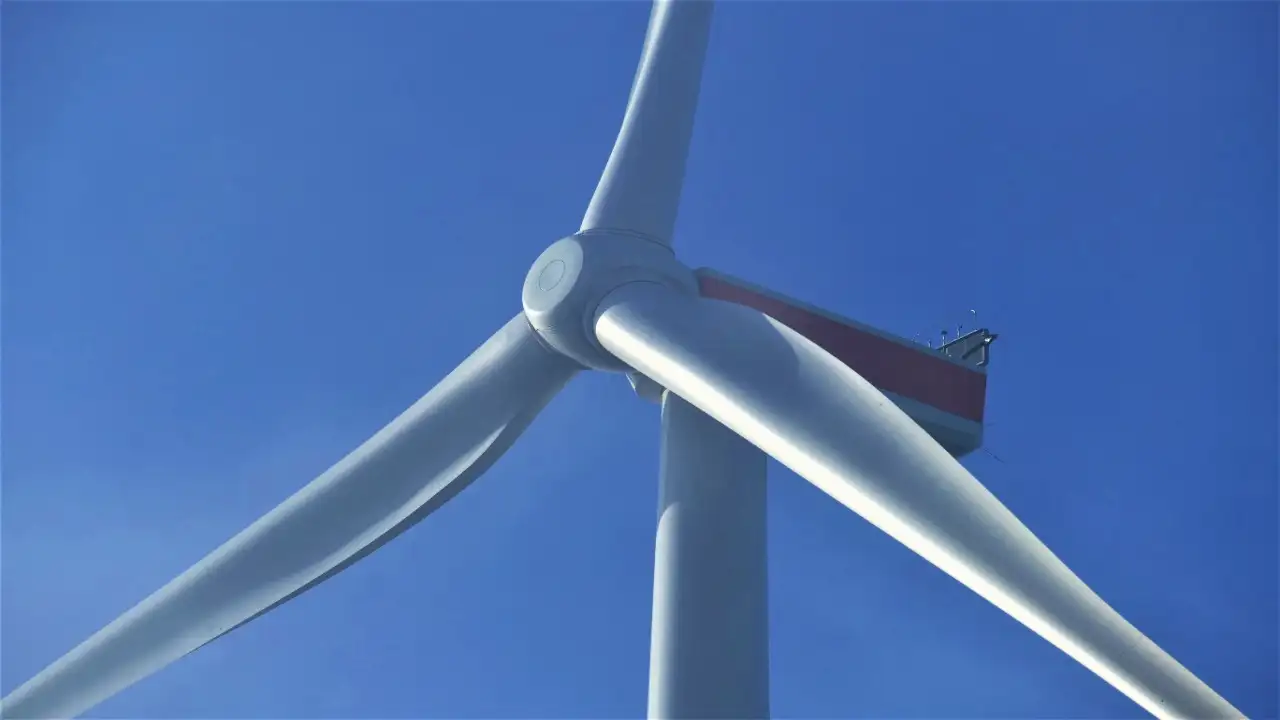
Recycled wind turbine blade material could improve the ability of asphalt mixtures to withstand deformation at low temperatures, according to a 2023 laboratory study. Researchers found that combining recycled wind turbine blade (rWTB) powder and fibre led to an increase of the asphalt mixture’s ultimate strain by 34.2%,indicating that the modified mixture could tolerate greater deformation before cracking. The material of the recycled blade was tested with a powder smaller than 0.075 millimetres and fibre ranging from 0.075 to 9.5 millimetres. The work addressed two materials challenges at once: the 20-25 years lifespan of wind turbine blades, and the fact that most blade materials are made of glass-fibre-reinforced plastics, according to the paper. In the asphalt tests, rWTB powder replaced portions of the fine filler at concentrations of 5%, 10%, and 15%. Concurrently, rWTB fibre replaced part of the fine aggregate at concentrations of 0.1%, 0.2%, and 0.3% Representative image of a turbine. (Image Credits: Pexels) The recycled fibre changed how asphalt responded to low temperatures
Because they contained 60%–70% fibre and 30%–40% cross-linked thermoset polymer, the recovery and reuse of these blade materials were difficult. The study published in Frontiers in Materials by Tianhui Lan, Bingze Wang, Junchao Zhang, Hao Wei and Xu Liu, investigated whether waste from retired wind turbine blades could be incorporated into asphalt mixtures. This led researchers to examine mechanical recycling, which produces blade material in forms that can be reused in other products.
Researchers evaluated the modified asphalt mixtures for rutting resistance at 60°C using wheel tracking tests. Using three-point bending tests low-temperature cracking resistance at −10°C was tested and water stability using Marshall immersion tests. The addition of rWTB powder alone yielded an increase of about 10% in ultimate strain when compared to the reference mixture, and when recycled fibre was introduced, the effect became more pronounced. At the highest fibre concentration of 0.3%, ultimate strain increased by 28.2% compared to the reference mixture, while a blend of 0.3% rWTB fibre and 10% recycled powder achieved a 34.2% increase. Thermogravimetric testing also indicated that the recycled blade material had high thermal stability below 200°C, a range relevant to asphalt mixture compaction, paving and service, while significant mass loss occurred at around 350°C and 600°C.
This improvement was attributed to the physical role of the recycled fibre within the asphalt mortar, microscopic examination showed that the fibre was wrapped by asphalt mortar, with a tight interface between the two materials. This allowed the fibre to transfer loads and distribute stress through a bridging effect and the mixture to accommodate greater deformation under low-temperature conditions. Moreover, the powder and fibre also produced different effects. At low temperatures, recycled powder improved flexural strength, while the fibre mainly increased ultimate strain. Powder and fibre worked at different scales, with trade-offs The researchers found that using the two recycled blade forms together could modify the asphalt mixture at different scales. The powder interacted with the asphalt mortar, while the larger fibres provided reinforcement within the mixture.