
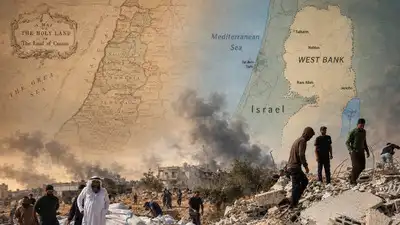
Tracing the conflict over the land, from ancient Canaan to the modern-day Israel-Palestine conflict.
More than 1,200 people were killed and 251 people were taken hostage on October 7, 2023, according to the United Nations. In modern political and popular discourse, the Jewish connection to the land is said to be going back 3,000 years. 13:15) The biblical story continues through Abraham’s son Isaac and grandson Jacob, who is given the name Israel. The modern State of Israel was established only in 1948. On May 14, 1948, David Ben-Gurion, the head of the Jewish Agency and leader of the Jewish community in Palestine, declared the establishment of the State of Israel and became its first prime minister.
Hamas and other Palestinian armed groups launched a large-scale attack from Gaza, crossing the border and attacking Israel during a music festival.
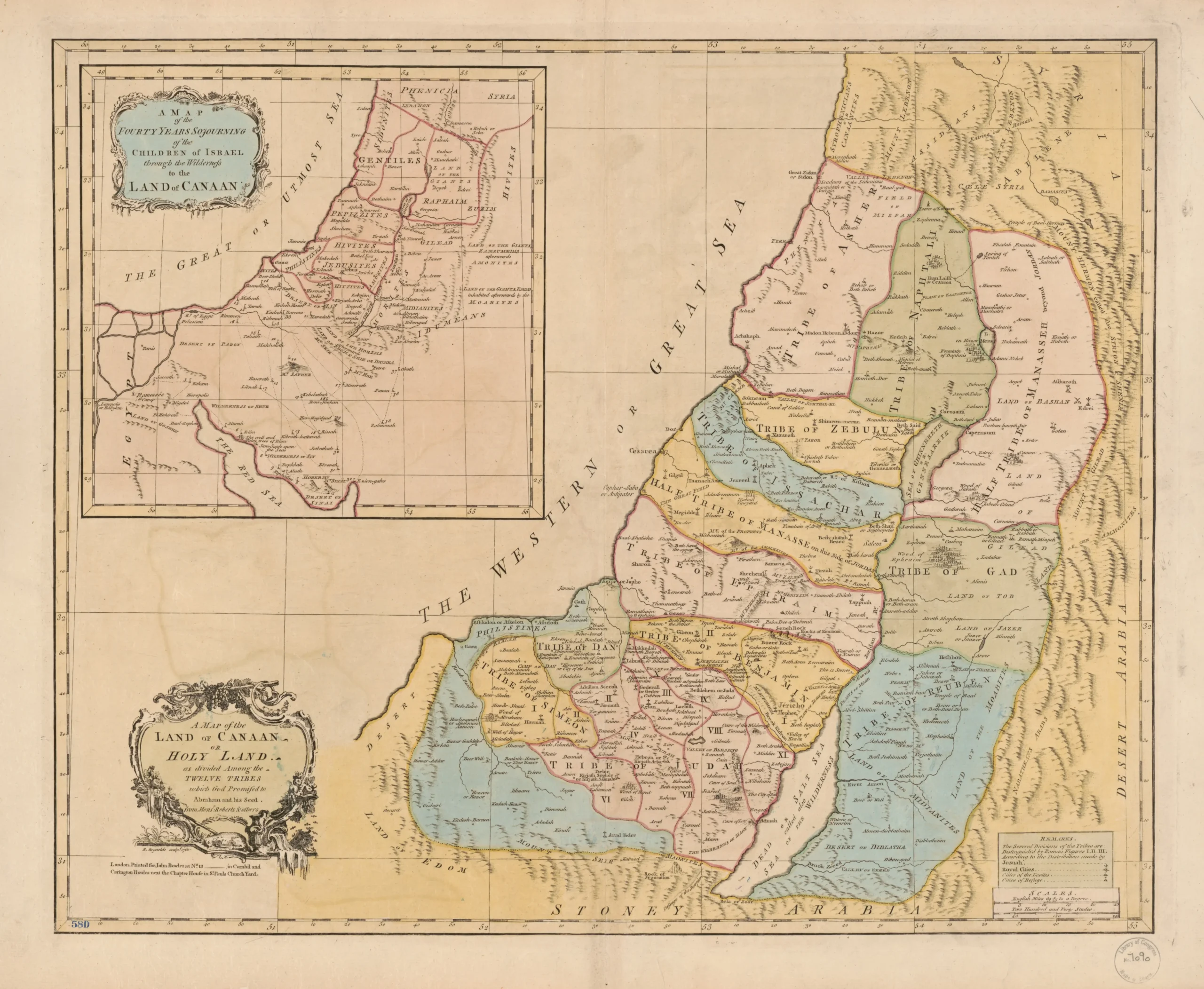
The reasons include the history of the two much before October 7, starting with a “promised land”. It all begins with Abraham, a biblical patriarch, and the Jewish belief of the “Promised Land”. God tells Abraham to leave his homeland and travel to a land that God will show him, according to the Book of Genesis. This becomes the basis of the Jewish concept of the “Promised Land”. “Map of the biblical Land of Canaan and its division among the Twelve Tribes of Israel, as described in the Hebrew Bible (John Bowles, 1760).” (Credit: Library of US Congress, Geography and Map Division) For centuries, the Jewish connection to the Land of Israel remained deeply rooted in religion, history and identity. In 1917, Britain issued the Balfour Declaration, expressing support for the establishment in Palestine of a “national home for the Jewish people”. At the same time, the declaration said that nothing should be done to prejudice the civil and religious rights of the existing non-Jewish communities in Palestine.
Three years ago, Israel experienced one of the deadliest days in its modern history. The attack led Israel to launch a massive attack in Gaza that has since reshaped the region but remains unresolved. So, the question is why conflict resolution is so complicated. The figure refers to the history of the ancient Israelites and the long-standing Jewish religious connection to the land. Abraham is one of the central figures in the Hebrew Bible and is regarded in Jewish tradition as the first of the three patriarchs of the Jewish people, followed by his son Isaac and grandson Jacob. He is also an important figure in Christianity and Islam. That land is subsequently identified in the biblical account as Canaan, an ancient name for a region encompassing parts of present-day Israel and the Palestinian territories, although biblical descriptions of its boundaries vary. God then promises the land to Abraham’s descendants. For all the land which thou seest, to thee will I give it, and to thy seed for ever. (Gen. Thus, Jacob’s descendants became known as the ‘Children of Israel’. However, the biblical Land of Israel and the modern State of Israel are not the same thing. The biblical story belongs to an ancient religious tradition dating back thousands of years. For centuries, however, the land remained central to Jewish religious memory. Even after Jews were dispersed across different parts of the world, prayers and religious traditions continued to focus on Jerusalem and the Land of Israel. Even after Jewish communities were dispersed across different parts of the world, Jerusalem and the land remained central to Jewish religious memory and prayer. By the late 19th century, that ancient connection began to take on a modern political form. Zionism emerged in Europe as a movement seeking Jewish national self-determination and a homeland for Jews, amid growing antisemitism and persecution. And the territory at the centre of that movement was Palestine, which encompassed much of the land Jews regarded as their historic homeland. But Palestine was not an empty land waiting for a new population. It was home to a predominantly Arab population, including Muslims and Christians, as well as a longstanding Jewish community. As Jewish immigration increased, particularly from Europe, two national movements increasingly came to see the same territory as their homeland: the Zionist movement seeking a Jewish national home, and Palestinian Arabs seeking political self-determination in the land where they lived. That claim to the same territory would become the central question of the conflict that followed. The First World War transformed the region. At the time, Palestine was part of the Ottoman Empire. During the war, Britain fought the Ottoman Empire and eventually took control of the territory. For the Zionist movement, the declaration was a major diplomatic breakthrough.
So where does October 7 fit into this history By October 7, 2023, the conflict had already passed through major wars in 1948, 1967 and 1973, as well as two Palestinian uprisings known as the Intifadas. Three years later, October 7 remains the defining date of the current conflict. However, coming back to October 7 and the subsequent conflict, it cannot be explained simply as a religious fight over the land promised to Abraham.
Israel subsequently launched its war in Gaza.
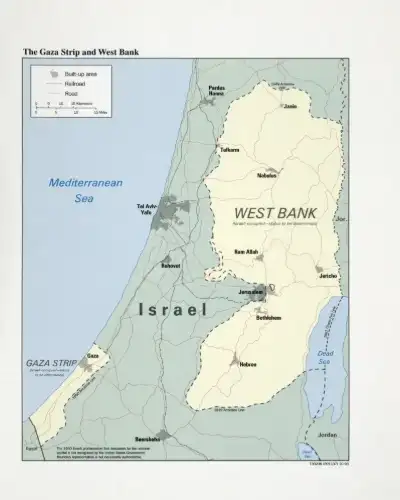
Israel’s government and different political and religious groups have had varying positions on the status of the West Bank, with parts of Israeli society viewing the territory through the biblical and historical framework of “Judea and Samaria”, the biblical and historical names for the area now commonly known internationally as the West Bank. The “Promised Land” is therefore the beginning of the backstory, not the whole story. Map showing the modern-day West Bank and surrounding areas,(Credit US Library of Congress, Geography and Map Division) Israeli settlements were subsequently established in the occupied territories. The settlement issue became one of the most contentious subjects in Israeli-Palestinian negotiations. The UN continues to refer to the West Bank, including East Jerusalem, as occupied Palestinian territory. This is where the ancient idea of the Promised Land intersects most visibly with the modern conflict. There had also been the Oslo peace process, the split between Hamas and the Palestinian Authority, and repeated rounds of fighting between Israel and Hamas. At the heart of the unresolved conflict were longstanding disputes over territory, Israeli settlements, Jerusalem, Palestinian refugees, borders and the creation of a Palestinian state. Then came the Hamas-led attack on Israel three years ago. However, as explained, the actual conflict started much before. The phrase helps explain why the land itself carries such deep meaning. The backdrop comes from there but the conflict is the result of several layers of modern history. These include the rise of nationalism, European antisemitism and Jewish immigration, the British Mandate, the Holocaust, the creation of Israel and the displacement of Palestinians. Still, to understand why the conflict has proved so difficult to end, one has to understand something that predates both Israel and Palestine as modern political entities. You use AI every day. Now get your AI Quotient. Take the AIQ test.
In 1947, the UN proposed partitioning Palestine into two independent states – one Jewish and one Arab. 1948: Israel is born, Palestinians experience the Nakba Because of its importance to Jews, Muslims and Christians, jerusalem was to be placed under a special international regime.
For the Arab population of Palestine, however, the prospect of a Jewish national home in a territory where they were already the majority gave rise to concerns and opposition. Britain subsequently governed Palestine under a League of Nations mandate. Jewish immigration increased, while relations between Jewish and Arab communities became increasingly tense and violent. After the Holocaust and the devastation of European Jewry during World War II, international support for a Jewish state grew. Britain eventually handed the Palestine question to the newly established United Nations. Jewish leaders accepted the partition plan but Arab Palestinian leaders and Arab states rejected it. The dispute soon turned into war.
During the Six-Day War in 1967, Israel captured the West Bank, East Jerusalem and Gaza, along with other territories. The occupation also meant that about 1.2 million Palestinians came under Israeli military control, as per UN’s historical account.
Palestinians refer to this mass displacement and dispossession as the Nakba, or “catastrophe”. The next day, armies from neighbouring Arab states entered the conflict, beginning the first Arab-Israeli war. Israel not just survived the war but ended up controlling considerably more territory than the Jewish state envisaged under the UN partition plan. The Palestinian Arab state proposed by the UN was never established. For Palestinians, it meant that more than half of the Palestinian Arab population fled or were expelled., becoming refugees. Thus, many Palestinians and their descendants continue to demand the right to return to homes and properties from which they were displaced, while Palestinian national politics increasingly came to centre on self-determination and statehood. Another major turning point came nearly two decades later. The war brought another major displacement of Palestinians and placed the territories at the centre of the conflict that followed. For Palestinians, the West Bank and Gaza became central to their demand for an independent state, while East Jerusalem became a particularly important part of their national and religious claim.