
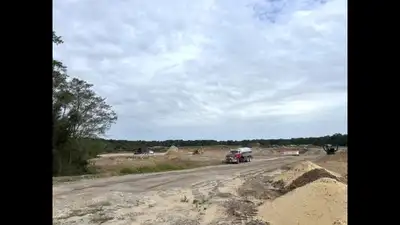
The East Hampton Star first reported the proposed $36.3 million acquisition on October 1, while Long Island Life & Politics reported this week that the town sees the purchase as a way to preserve the property while retaining part of it for future municipal needs. The town is seeking to acquire 38.3 acres of the 70.5-acre property at 104 Wainscott Northwest Road. Under the proposal, about 33.3 acres would be designated for parks, recreation and open space, while roughly five acres would be reserved for municipal purposes.
East Hampton Town is moving toward a multimillion-dollar purchase that could dramatically change the future of a large former sand mine in Wainscott, New York. The town has not yet determined a specific use for that smaller portion. The property sits in the middle of Wainscott’s commercial area, north of Montauk Highway and near the headwaters of Georgica Pond. Its location has made the site a particularly significant piece of undeveloped land in a densely watched part of East Hampton.
The town paid $56 million for a 30-acre property on Wainscott’s Main Street in late 2024. About 86.95% of the purchase would come from Community Preservation Fund money for the open-space portion, while 13.05% would be financed through bonds for the five-acre municipal section.
The proposed purchase would be the second-largest amount East Hampton Town has spent on a single parcel, according to The East Hampton Star. The financing would be split between two sources.
A 2022 environmental impact statement prepared for the commercial-center application described the property as a reclaimed former sand and gravel mine and examined the consequences of turning it into a large commercial subdivision. The latest proposal would preserve most of the 38.3 acres rather than divide that portion into commercial lots. For now, the five-acre municipal section remains the biggest question mark. The town would retain flexibility over its eventual use while placing the overwhelming majority of the acquired land under open-space and recreation purposes.
The site’s environmental importance has been part of the debate long before the current acquisition proposal. The Wainscott hamlet planning process had previously considered a range of alternatives for the property, including open space, recreation, shared parking, affordable housing, renewable energy and transportation improvements.