
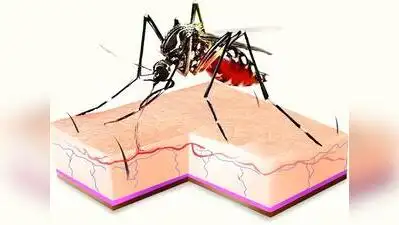
Pune : Intense heat in Oct has created favourable conditions for mosquito breeding in the city and contributed to a rise in dengue cases, public health experts and doctors said.
More than 1,700 suspected dengue casesand 90 confirmed cases have been reported from hospitals across the city since Jan this year, according to PMC records. The civic body has also recorded 26 chikungunya cases. PMC data further shows that 173 suspected dengue cases were reported through May this year, followed by 175 suspected cases across June and July (with 12 confirmed cases in each month). Aug and Sept recorded 484 and 508 suspected dengue cases, respectively. As of Oct 8, there have been 96 suspected and 25 confirmed cases. We are also seeing patients presenting later, often after 3–4 days of fever, which can increase the risk of complications and prolong recovery, particularly for dengue.
Prevention is equally important; therefore, avoid stagnant water around your home, use mosquito repellents, wear clothing that covers your arms and legs, keep water containers properly covered, use mosquito nets or screens where appropriate, and seek medical advice rather than self-medicating with painkillers. ”
Dr Rajesh Dighe, assistant health officer, Pune Municipal Corporation (PMC), said, “Warm weather accelerates mosquitoes’ metabolism and life cycle, allowing them to develop from eggs into adults faster and increasing their population. Dr Vaishali Pathak, consultant, internal medicine, Sahyadri Hospital, said, “We are continuing to see a significant burden of dengue and chikungunya this season, with cases remaining high even as we move into Oct. Dr Aparna Kodre, deputy head of medicine department, Noble Hospitals and Research Centre, said, “There has been an increase in incidence of dengue cases, and this can be attributed to the post-monsoon Oct heat and humidity favouring breeding of Aedes mosquito. Along with adults, paediatric dengue cases are also rising, according to Dr Nakul Pathak, consultant, paediatric intensive care and emergency, Surya Mother and Child Super Speciality Hospital. Dr Rajiv Kumar, general physician at Apollo Clinic, said, “Early medical assessment is important, especially during dengue season.
The impact is being felt at city hospitals, where dengue patients are increasingly occupying beds and some are taking longer to recover, continuing to experience weakness and other symptoms even after discharge. High humidity also improves mosquito survival, studies show . The combination of residual moisture, humidity, and favourable breeding conditions for Aedes mosquitoes can sustain transmission, although heat alone is not the cause. Early testing, adequate hydration, and timely medical assessment are crucial. The recent rise reinforces the need for continued mosquito-control measures and heightened clinical vigilance. More cases are presenting with complications of dengue, such as serositis, dengue hepatitis, dengue shock syndrome, and low platelet counts. He added, “We are continuing to see dengue and chikungunya cases at our hospital even as we move into Oct. The lingering heat and humidity, along with stagnant rainwater, can keep mosquito breeding active. What worries us is that some patients, especially children, reach the hospital only when their symptoms have worsened. With dengue, the condition can deteriorate even as the fever starts settling, sometimes leading to fluid leakage, bleeding, or shock. These complications can mean longer hospital admissions and a much slower recovery. Doctors have urged residents to eliminate stagnant water and seek medical attention for persistent fever, body aches, or weakness. Your doctor may advise appropriate blood tests and monitor platelet count, haematocrit levels, and hydration status when clinically indicated.