Every monsoon and every summer, there’s a repeated trend in the country’s dermatology clinics, where people walk in with the idea that their tan has refused to fade. Often, closer examination reveals that the blemish on their cheeks or arms is not a result of tanning at all. they are different from one another and have varying causes, duration of onset, and even treatment methods Although people confuse pigmentation with tanning most of the time. The easiest way to begin telling them apart is to look at where the darkening appears, how evenly it is distributed, how long it stays and what may have triggered it. Confusing the two often leads to months of wasted effort on home remedies or over-the-counter creams that were never designed to address the actual problem. Dr Geeta Mehra, Dermatologist at Skin & You Clinic, shares insights.
Because the underlying trigger, such as hormonal fluctuation, an old acne scar, or repeated micro-injury to the skin, continues to stimulate melanin production in specific patches rather than uniformly across the exposed area, these do not always resolve with time alone.
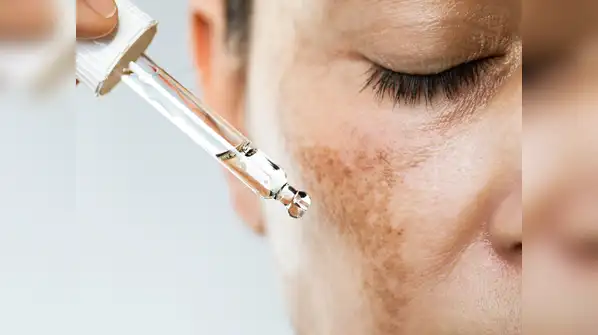
Tanning may affect the forehead, cheeks, arms or hands according to sun exposure, whereas dark spots can have clearer boundaries and remain present over time. Tanning acts as a defense mechanism of the skin against ultraviolet rays. When the UV rays touch the skin, the melanocytes increase the production of melanin, which absorbs the rays, protecting the inner layers of skin from damage. This is a temporary, homogeneous darkening process that usually follows the areas exposed to sunlight and gradually fades once further sun exposure is reduced. Dark spots, on the other hand, point to a more serious pigmentation problem, such as melasma, post-inflammatory hyperpigmentation, or solar lentigines. Since Indian skin commonly falls within medium to deeper Fitzpatrick skin phototypes, it is more likely to produce melanin in response to stimuli, resulting in pigmentary problems that may be more frequent and harder to deal with. A useful distinction is the pattern: tanning generally appears more evenly across sun-exposed skin, while pigmentation tends to be patchy, localised or follow a specific pattern. Melasma in particular often appears symmetrically on the cheeks, upper lip or forehead and tends to worsen with hormonal shifts and sun exposure. Post-inflammatory pigmentation, meanwhile, often appears exactly where acne, irritation or a previous injury occurred. The use of sunscreen and antioxidants remains the first line of defence against tanning, since prevention and gentle exfoliation can help restore evenness. However, pigmentation disorders require a measured approach, since the presence of melanin in the skin varies depending on the type of disorder, and the wrong treatment could worsen post-inflammatory hyperpigmentation, especially in Indian skin. This is where energy-based devices have become part of the dermatologist’s toolkit alongside topical regimens. The use of platforms like Harmony XL Pro, which combine several wavelengths to treat pigmentation at different levels in the skin, enables clinicians to customise their treatments depending on whether it is superficial sun damage or deeper pigmentation, instead of using a set laser parameter that fits all cases. For anyone unsure about whether a patch is simply a tan or something more persistent, the pattern, duration and trigger provide useful clues, but they cannot replace a diagnosis. An appropriate dermatological assessment, assisted by a Wood’s lamp assessment, is essential for identifying the extent of the pigmentation which may not necessarily be visible to the naked eye. Self-assessment done through looking at oneself in the mirror or seeking guidance from social media platforms only serves to delay the necessary treatment and, in many cases, worsen the very spots the patient is working hard to reduce. pigmentation is more localized and persistent or linked to another trigger While tanning usually occurs after sun exposure and fades over time with protection. Recognising these differences early helps determine whether the skin needs patience, prevention or precision in treatment.