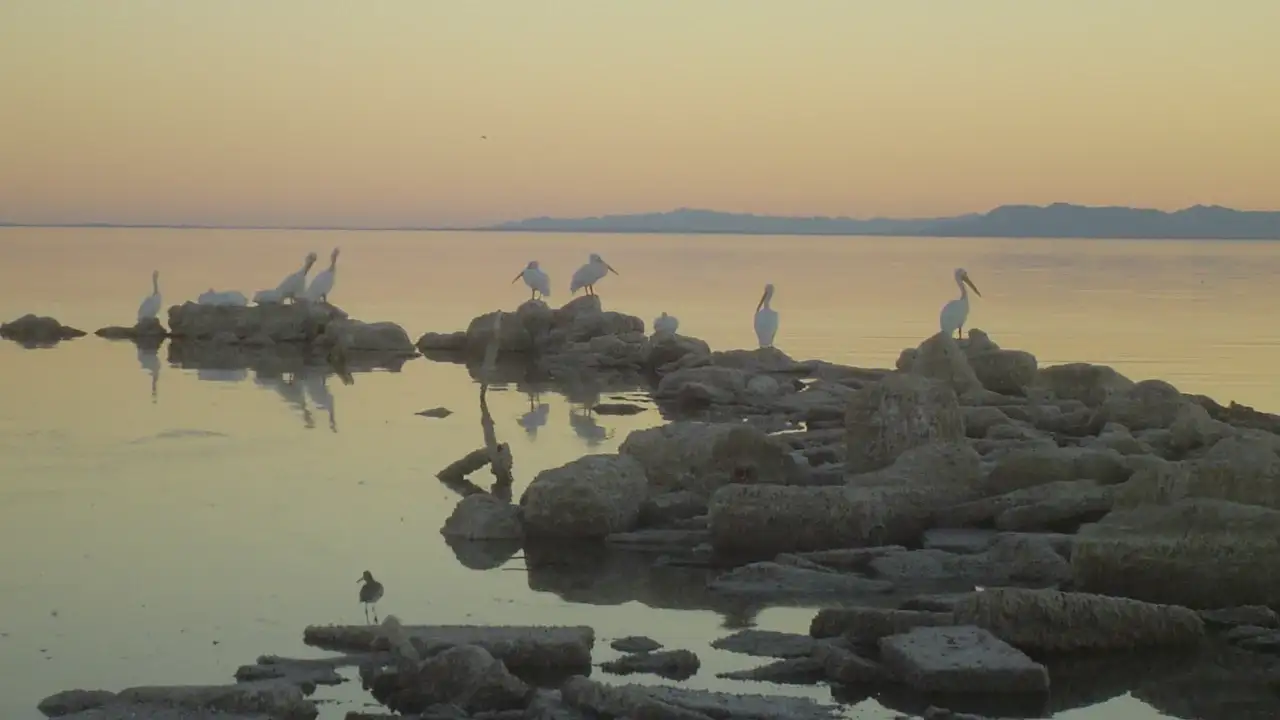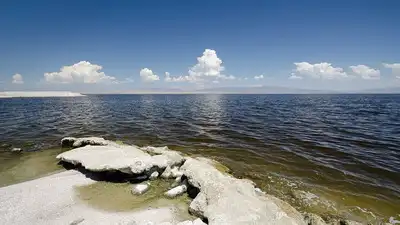
California flooded three square miles of exposed Salton Sea lakebed. Image credits: Wikimedia Commons
California reached a restoration milestone in 2025 when water began filling the East Pond Expansion, part of the state’s Species Conservation Habitat (SCH) Project. The East Pond Expansion covers approximately 750 acres. Together with the existing East Pond, the two ponds account for a combined area of approximately 2,000 acres.
As the Salton Sea recedes, the exposed lakebed creates two major environmental concerns: habitat loss and dust that wind can carry into nearby communities.
The research defines a dust-storm hour as one when PM10 concentrations exceed 150 micrograms per cubic meter. The study did not find the same association among children living 11 kilometres or farther from the Salton Sea. Among children living less than 11 kilometres from the Salton Sea, every additional 100 hours of dust-storm exposure per year was associated with a 9.5-percentage-point increase in wheezing and a 4.6-percentage-point increase in bronchitic symptoms. There is an additional 2024 study, Hydrogeologic and hydrochemical inputs to emerging wetlands on the shores of the receding Salton Sea, California, which studied the water sources and water quality at the Bombay Beach Wetlands.
The paper “Air Quality and Wheeze Symptoms in a Rural Children’s Cohort Near a Drying Saline Lake,” published in the journal Environmental Research , has investigated the link between respiratory symptoms and particulate matter exposure among 722 primarily Latino or Hispanic children. Playa is another threat in addition to habitat destruction. Winds can lift small particles from exposed soils, blowing the dust into nearby areas. Imperial Valley residents already struggle with air quality problems, and thus the control of dust in the region around the Salton Sea is a public health problem. Caregivers provided information on the children’s respiratory symptoms, whereas researchers used air-monitoring data to estimate dust-storm hours. The SCH Project aims to deal with habitat losses in relation to the reduction of the surface area and increased salinity in the Salton Sea. Aquatic habitat can be created through shallow ponds, and nesting/loafing islands will serve as sites for resting and breeding for birds. Water quality is also crucial for the fish and other animals making up the food web. In particular, there were two proposed water sources: thermal artesian water or a combination of thermal artesian water and sediment water from the receding shoreline. Since the mentioned study does not consider the SCH Project, it cannot be taken as an assessment of the East Pond Expansion. The research nevertheless illustrates a broader consideration for wetland restoration: the presence of water alone does not guarantee that a wetland will sustain a particular ecological community. Water chemistry and the way water reaches a wetland can also affect its ecological conditions. For the SCH Project, maintaining suitable habitat and water conditions will be important to the long-term value of the restored ponds.