
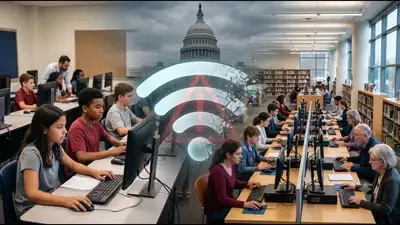
AI generated image for representation
FCC Chairman Brendan Carr has questioned whether the programme remains necessary, given the expansion of broadband connectivity over the past three decades, according to a report by Ars Technica. He has asked for public comment on whether to limit or discontinue E-Rate. Educational institutions, library associations and broadband industry groups argue that reliable internet access remains essential for learning, public services and network maintenance, particularly in rural and low-income communities.
Why schools say they still need E-Rate
Established following the 1996 telecommunications law, E-Rate provides discounts to eligible schools and libraries for telecommunications services, internet access and network equipment. It noted that only 35% of public libraries in Texas receive E-Rate discounts, compared with 65% nationally. The association added that only 55% of Texas public libraries meet the FCC’s recommended broadband speed benchmarks.
The Texas Library Association said the programme should provide more funding to help libraries improve broadband speeds. If the FCC terminates or limits E-Rate funding , many of New York’s libraries will be forced to reduce programs and services in order to continue providing Internet access,” it said. If support were reduced, we would face higher local costs, delayed network upgrades, and pressure to redirect funds from other school priorities,” Lapka said.
The programme is funded through fees imposed on telecommunications companies, which often pass the costs on to consumers through monthly bills. “E-Rate is essential for reliable broadband speeds and for regular network maintenance, safety, and security. The library can’t operate without the Internet. “E-Rate support allows us to maintain reliable, high-speed Internet and network equipment. The Schools, Health & Libraries Broadband Coalition has also opposed the proposal, arguing that E-Rate remains a key source of funding for digital connectivity.
The FCC already withdrew funding last year for schools and libraries to lend Wi-Fi hotspots and provide Wi-Fi connectivity on school buses.