
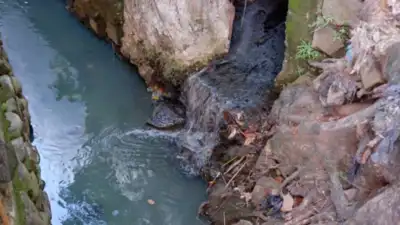
Representational image
That is the frightening reality captured in CCTV footage from Panipat, where a child fell into an uncovered drain near Devi Mandir in Ward 3. 5 Oct 2026 | 12:06 The most troubling detail is that locals said this was not the first accident at the same spot. A few inches of rainwater can hide a hole deep enough to swallow a child. A drain may look like an ordinary stretch of road, its edges concealed by muddy water. For a child hurrying home or stepping around a puddle, the danger may be invisible until the ground suddenly gives way. A man at the spot immediately jumped in and rescued the child. The incident, as per a video shared by NDTV through its social media handle, has renewed concern about open drains and waterlogged roads that can turn familiar neighbourhood routes into dangerous places. The rescue brought relief, but it also raises a question for families: how do you teach children to recognise a danger that rainwater has made almost impossible to see? Water changes how a street looks. A shallow puddle may conceal a deep pothole; muddy water can hide a missing drain cover, an uneven surface or an excavation left behind during roadwork. Children, particularly younger ones, may not recognise these hazards or understand how quickly a misstep can become an emergency. The danger is not limited to open drains. India’s Directorate General of Fire Services, Civil Defence and Home Guards advises people to watch where they step in flood-affected areas and warns that standing water can conceal open manholes and ditches. Floodwater can also contain sewage, chemicals and other contaminants.
A woman and motorcycle riders had reportedly fallen into similar hazards there earlier.
What parents should teach children before they step outdoors
Because other people are doing it, never cross a waterlogged stretch just.
Instead of only telling children to “be careful”, give them a clear instruction: If rainwater hides the ground, do not step into it. Teach children to turn back and find another route if they cannot see the road surface clearly. A familiar lane can become unsafe after heavy rain, even if the water does not look deep. Keep away from drains, manholes and roadwork. Explain that water may conceal an uncovered drain or a hole dug for repair work. Children should never try to jump across a flooded section or walk along its edge. If a route is barricaded, they should not go around the barrier. Use a safer route and, when needed, adult supervision. For younger children, parents can walk them to school or arrange for a trusted adult to accompany them during heavy rain. Check the route beforehand and avoid shortcuts through waterlogged lanes, construction sites or poorly lit areas. Make the rule simple enough to remember. Practise what they should do if a familiar path is flooded, including whom to call for help. Do not let children play in floodwater. Even water that appears still can hide hazards, while contaminated water may expose children to germs. UNICEF advises families to keep children away from floodwater and to follow local authorities’ warnings during flooding. A successful rescue should not be the only thing that makes a dangerous stretch safe. The lasting solution is to ensure that the next child, pedestrian or two-wheeler rider never has to discover the hazard by falling into it. You use AI every day. Now get your AI Quotient. Take the AIQ test Get the latest Lifestyle News and more. Download the TOI app.
In Panipat, residents’ reports of earlier falls at the same location make the incident especially concerning.
Children can be taught to avoid danger, but they cannot be expected to identify every uncovered drain hidden beneath rainwater. That responsibility also lies with civic authorities and contractors, who must secure excavations, cover drains and put up visible barricades and warning signs.