
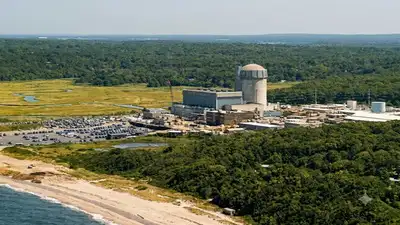
Much of the land surrounding the nuclear plant has remained undeveloped (Photo: American Nuclear Society- AI enhanced image)
A nuclear power project abandoned decades ago has left behind nearly 750 acres of undeveloped coastal land in New York. The state has now purchased the property for $28.25 million to protect its forests, wetlands and shoreline permanently. much of the adjoining land remained undeveloped Although the nuclear facility was abandoned in 1989. DEC identified the property for preservation in its 2016 conservation plan and included it again in the draft plan for 2026. The project was abandoned in 1989 following years of controversy, and the facility was decommissioned in 1994. Amper had proposed nearly a decade ago that the area should become a state park or join the Pine Barrens Preserve, according to News 12 New York. His conservation work had contributed to protection of more than 100,000 acres on Long Island. Amper died in March this year, aged 81. The nearly 750-acre property contains several different types of natural landscapes. Along the coast are sand and gravel beaches and bluffs rising to approximately 100 feet. More than 40 acres are covered by tidal marshes and shrub swamps. The funding included contributions from the US Environmental Protection Agency’s Long Island Sound Partnership Program, the New York State Clean Water Infrastructure Act and the 1996 Clean Water, Clean Air Bond Act. The acquisition also forms part of the state’s ’30×30′ initiative, under which New York aims to protect 30% of its lands and waters by 2030.
Because of its coastal forests, rare plant species and importance to Long Island’s groundwater supply, environmental groups had long sought protection for the site. Therefore, the plant was built but never entered full commercial operation. The property surrounds the former Shoreham nuclear power plant in Suffolk County. It stretches across parts of Shoreham and Wading river, along Long Island Sound. The state will now manage the area for environmental conservation and eventually open designated sections to visitors. The purchase ends a conservation effort that had continued for more than a decade. The state acquired the land from National Grid using money from several environmental funding programmes. The Shoreham nuclear power project had become a major source of disagreement on Long Island. Residents raised concerns about safety and emergency arrangements, including how communities would be evacuated if a nuclear accident occurred. After the project ended, the land surrounding the plant remained largely unused. Its future, however, continued to attract attention from environmental organisations that wanted the property protected and not developed. Richard Amper, a conservation campaigner associated with the Long Island Pine Barrens Society, was among those who supported its preservation. Protecting Long Island’s groundwater supply is one of the reasons environmental groups have supported the preservation of the Shoreham property. The island depends on a sole-source aquifer, an underground water source. Conservation groups say the forests and wetlands on the land can help replenish groundwater, reduce flooding and limit pollution entering nearby bays and Long Island Sound. The property is also important for wildlife. It provides habitats for several bird species, including osprey and the endangered piping plover. Rare native plants and other coastal species are also found in the area. Its preservation means these habitats will remain protected from future development. Other parts of the land contain pine barrens, coastal oak-heath forests and maritime shrublands. Apart from its environmental importance, the property also contains a site of cultural significance. John Turner, co-founder of the Long Island Pine Barrens Society, identified Split Rock, a large glacial boulder complex, as a place that held spiritual importance for several indigenous Native American tribes. The protected land also includes nearly a mile of natural shoreline. New York has funded the purchase through a combination of environmental programmes. Visitors will eventually be able to use marked trails and designated beach access areas. Plans also include a public parking facility and accessible multi-use trails. You use AI every day. Now get your AI Quotient. Take the AIQ test.
Governor Kathy Hochul announced the acquisition on Thursday, marking the largest purchase of land on Long Island by the New York state department of environmental conservation (DEC), LongIsland.com reported.