
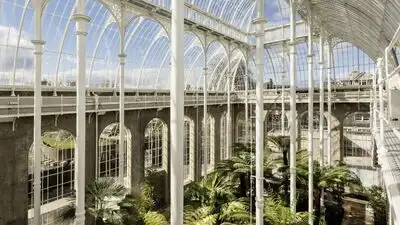
The Royal Botanic Garden Edinburgh has officially reopened its two historic Palm Houses after a complex five-year restoration project costing £23.5 million. The reopening is a major milestone in the garden’s 356-year history. It also marks the completion of an important stage in the wider £58 million Edinburgh Biomes development programme. The two glasshouses include the original Octagonal Palm House, built in 1834, and its Victorian neighbour, built in 1858.
The work included replacing every single pane of glass in both buildings. The Victorian building is recognised as the tallest traditional stone-built Palm House in the world.
The collection includes 13,500 species gathered from 152 countries. The garden confirmed that visitors must book timed tickets to enter the Palm Houses.
“As we fight to tackle climate change and nature loss, the reopening of the Palm Houses is a globally significant moment for Scotland and the world,” Knights said in a press release issued by the institution. The restored glasshouses provide a vital safe space for vulnerable plants in Scotland’s National Botanic Living Collection. Among the rare plants now growing beneath the new glass are the Three Kings vine (Tecomanthe speciosa) from New Zealand, considered one of the rarest wild plants in existence, and the Catkin yew (Amentotaxus argotaenia), a conifer classified as critically endangered. Professor Julia Knights, Regius Keeper at the Royal Botanic Garden Edinburgh, highlighted the wider importance of the restoration for global conservation. “As well as celebrating our Living Collection of plants, including those endangered in the wild, this moment also reflects our work as Scotland’s global scientific centre of excellence in plant science, horticulture, education and conservation. The next stage of the Edinburgh Biomes project will focus on upgrading the site’s research glasshouses.
Before construction began in 2021, horticultural experts carefully moved 800 valuable plant specimens from the glasshouses to temporary holding areas elsewhere in the garden. Replanting started earlier this year, with nearly 600 specimens returned to their restored homes. It was grown from a seed taken from one of the garden’s oldest historical plants, a Sabal mexicana estimated to have been around 200 years old before it was cut down in 2021.
“For generations the iconic Palm Houses at Royal Botanic Garden Edinburgh have inspired visitors from Scotland and around the world,” Martin said in a statement released by the Royal Botanic Garden Edinburgh. “The restoration of these heritage glasshouses helps to safeguard the globally important plant collections here for the future, ensuring vital work in conservation, education and scientific discovery can continue.” These include rare plants such as the stone gate palm (Trachycarpus princeps). The palm stands more than eight metres tall and is believed to be the largest specimen grown outside China. The collection also includes a ten-year-old sabal palm. To mark the reopening, Gillian Martin MSP, the Scottish Government’s Cabinet Secretary for Climate Action and Rural Affairs, joined garden staff to plant the final specimen in the glasshouses. The plant was a Chilean lion plant (Valdivia gayana) grown from a wild source.