
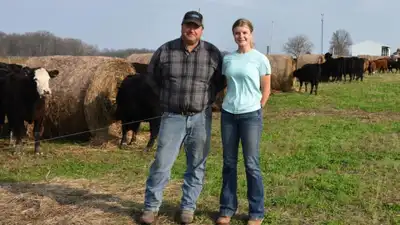
Because the property lies within the Blue River watershed, where sediment and agricultural runoff can affect aquatic habitats, the work also has wider environmental significance. Deep erosion channels cut through the fields, the soil had lost much of its productivity and corn yields were poor. An Indiana father and daughter faced a difficult challenge after buying farmland damaged by years of intensive crop production. Ben and Lily Shireman of southern Indiana decided to change how they managed the land, shifting towards rotational grazing, cover crops and other soil-restoration practices. Their efforts have helped reduce erosion, improve pasture conditions and lower the farm’s reliance on commercial fertiliser. The watershed supports the eastern hellbender, a large salamander that depends on clean water and rocky streambeds.
The family introduced rotational grazing, cover crops and improved pasture management to reduce erosion and rebuild soil health. With improved nutrient management, the family reported using less commercial fertiliser. They also used bale grazing, placing hay bales in selected areas so cattle could feed while distributing manure across the pasture. These practices help return nutrients to the soil and build organic matter. The changes were supported through conservation programmes administered by the US Department of Agriculture’s Natural Resources Conservation Service (NRCS). The family received support through the NRCS Environmental Quality Incentives Program and the Farmers Helping Hellbenders Regional Conservation Partnership Program. These initiatives help farmers adopt practices that improve soil health, reduce erosion and protect water quality. The assistance supported changes such as fencing, livestock watering infrastructure and improved grazing management. By tackling soil loss and nutrient runoff at their source, the Shiremans are contributing to wider efforts to protect the Blue River watershed and the eastern hellbender’s habitat.