
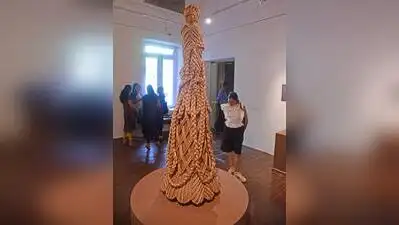
Pampa exhibition on Karnataka’s textile heritage was inaugurated at NGMA on Kannada Rajyotsava day in Bengaluru on Sunday
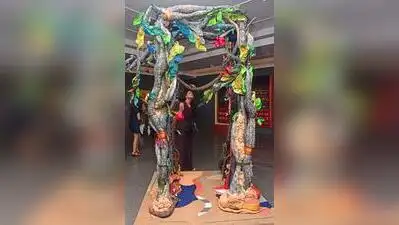
“The language of the weave had a remarkable similarity with the region’s textile tradition,” she said, recounting the story at the inauguration of Pampa – Textiles of Karnataka at National Gallery of Modern Art (NGMA) Sunday. When Lavina Baldota noticed the saree, she felt it had a connection with Molakalmuru. Pampa exhibition on Karnataka’s textile heritage was inaugurated at NGMA on Kannada Rajyotsava day in Bengaluru on Sunday Pampa exhibition on Karnataka’s textile heritage was inaugurated at NGMA on Kannada Rajyotsava day in Bengaluru on Sunday Pampa exhibition on Karnataka’s textile heritage was inaugurated at NGMA on Kannada Rajyotsava day in Bengaluru on Sunday Pampa exhibition on Karnataka’s textile heritage was inaugurated at NGMA on Kannada Rajyotsava day in Bengaluru on Sunday Pampa exhibition on Karnataka’s textile heritage was inaugurated at NGMA on Kannada Rajyotsava day in Bengaluru on Sunday Pampa exhibition on Karnataka’s textile heritage was inaugurated at NGMA on Kannada Rajyotsava day in Bengaluru on Sunday Pampa exhibition on Karnataka’s textile heritage was inaugurated at NGMA on Kannada Rajyotsava day in Bengaluru on Sunday Pampa exhibition on Karnataka’s textile heritage was inaugurated at NGMA on Kannada Rajyotsava day in Bengaluru on Sunday Pampa exhibition on Karnataka’s textile heritage was inaugurated at NGMA on Kannada Rajyotsava day in Bengaluru on Sunday Pampa exhibition on Karnataka’s textile heritage was inaugurated at NGMA on Kannada Rajyotsava day in Bengaluru on Sunday Bengaluru: A saree displayed in a Paris museum, catalogued simply as being from south India, caught the eye of a textile revivalist and set in motion an effort to revive a forgotten weaving technique in Karnataka.
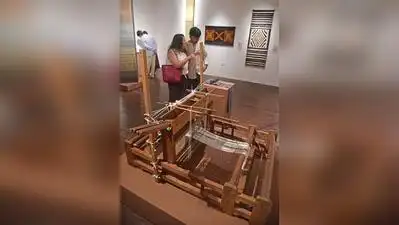
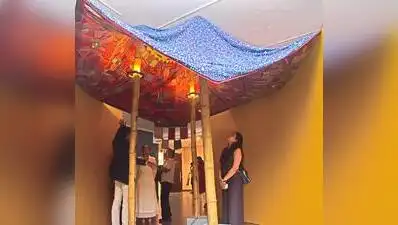
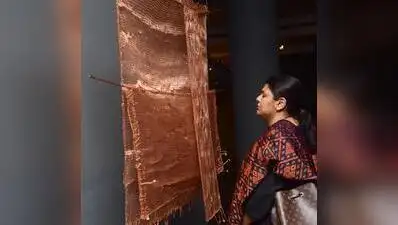
It brings together more than 150 textiles, artworks and installations, tracing Karnataka’s handmade and hand-patterned textile traditions from the 18th century to the present. First showcased at Hampi in March 2025, the exhibition seeks to highlight the cultural, social and economic significance of Karnataka’s textile traditions through recurring showcases. It will remain open to the public at NGMA Bengaluru until Dec 15.
Because it required more time and manpower, making it difficult to sustain, he said the technique had gradually faded. You Can Also Check: Gold Rate in Bengaluru | Silver Rate in Bengaluru | Bank Holidays in Bengaluru | Public Holidays in Bengaluru | Bengaluru AQI | Weather in Bengaluru | Petrol Price in Bengaluru | Diesel Price in Bengaluru | CNG Price in Bengaluru | LPG Price in Bengaluru Stay updated with the latest Bengaluru news.
Lavina said the idea for Pampa began with a question from fellow curator Mayank Mansingh Kaul about whether there was a book on Karnataka’s textile traditions. Union minister for culture and tourism Gajendra Singh Shekhawat described textiles as “living archives of our civilisational evolution and development”. Lavina and her team tracked down Manjunath DS, a weaver whose family has practised the craft at Molakalmuru in Chitradurga district for generations. After studying the saree’s weave, they found that it required a Jala loom, a technique once practised in the region but which gradually disappeared. Manjunath took up the challenge, learnt the technique and set up a loom to recreate the saree. the saree was eventually woven in Molakalmuru While the ikkat was tie-dyed in Telangana. For Manjunath, the exercise was also an opportunity to revive a tradition practised by his ancestors. The absence of a comprehensive account of the state’s diverse textile traditions prompted a search that turned into a journey of discovery. The curatorial team, which also included Nupur Saxena, documented traditions and met weavers and communities across the state. Organised by Abheraj Baldota Foundation to mark its 50th anniversary, Pampa is presented in collaboration with the Union ministry of culture and NGMA Bengaluru. The inauguration was attended by state chief secretary Shalini Rajneesh, NGMA director-general Sanjeev Kishor Gautam, NGMA Bengaluru director Priyanka Mary Francis and Baldota Group chairman Narendra Kumar Baldota. Download the TOI App.