
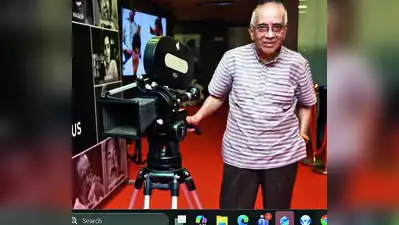
Singeetham Srinivasa Rao
Because neither character behaved like the standard hero or heroine, their romance worked. In a filmography celebrated for experimentation, technical ingenuity and extraordinary male performances, director-producer-screenwriter Singeetham Srinivasa Rao had a knack for creating women characters who were difficult to overlook. His heroines were not always ornamental companions to the hero. They could be eccentric, spirited, vulnerable, funny or quietly expressive — and sometimes they could walk away with a scene even when Kamal Haasan was standing beside them. Thirupurasundari was not imagined like the conventional heroine of a star vehicle. Singeetham allowed Urvashi to be unguarded — talkative, innocent, excitable and completely comfortable occupying comic space. Opposite Kamal’s Palakkad-accented Kameswaran, she did not merely react to his comedy; she helped elevate it. Kameswaran was awkward and conservative, while Thirupurasundari brought spontaneity and an endearing lack of sophistication. Even amid a film bursting with four Kamal Haasans, mistaken identities and an ensemble of formidable comic performers, Urvashi managed to give Thirupurasundari her own identity. The beauty of Singeetham’s film lay in this contrast. Singeetham’s dialogue-free film placed enormous responsibility on its performers. Amala, playing a magician’s daughter opposite Kamal Haasan’s unemployed young man, had to establish attraction, curiosity, amusement and affection entirely through expression and movement. There were no romantic lines to explain what she felt. Her face became her dialogue. The romance between Kamal and Amala consequently developed through glances, encounters and small gestures. Singeetham did not need elaborate declarations of love. In a film where silence was the grammar, Amala’s expressive eyes and understated performance fitted naturally into his experiment. It also demonstrated Singeetham’s confidence in his actresses. Silence could easily have reduced a heroine to a pretty presence. Instead, Amala remained an active participant in the visual storytelling. For a filmmaker famed for asking cinema to do the unexpected, perhaps Singeetham’s treatment of his heroines followed the same principle.