
Microplastic in milk
Laboratory analysis revealed plastic particles across the board, uncovering a total of 66 particles, with contamination ranging from 3 to 30 particles per litre. Because these materials are widely used in plastic containers and wrappers, researchers cited food packaging as a primary route through which microplastics enter the milk supply.
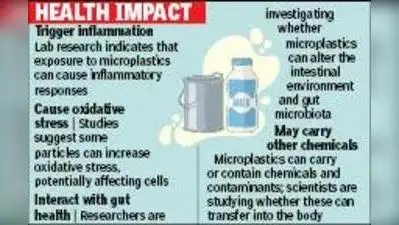
Chatterjee said: “Microplastics were detected in both packaged and raw cow milk in India. Kolkata: A glass of milk may be a part of the regular routine in every household but a recent study has found microplastic particles in both packaged and locally sourced raw cow milk. The research, jointly led by Debashis Chatterjee of University of Kalyani and Santanu Majumder of Bournemouth University, UK, has been published in the Journal of Food Composition and Analysis. The study analysed nine milk samples from in and around Kolkata, representing popular local options, including six commercial pouch milk products from four national and two regional brands, alongside raw cow milk from local vendors. Most particles were identified as tiny fibres or fragments, with polyethylene and polypropylene as the dominant polymers. This serves as critical evidence for mapping future national and international scenarios on health risks and food safety, raising urgent questions for consumers, dairy manufacturers, and policymakers to implement mitigation measures for daily food products that are essential for children, senior citizens, and vegetarians. ” Microplastic contamination poses growing health concerns. Emerging from degraded plastic debris, synthetic clothing fibres, personal care products and industrial packaging, these microscopic particles have been detected across everyday food items, including seafood, water, salt and milk. Researchers highlighted that regular microplastic ingestion and inhalation can trigger chronic inflammation, endocrine disruption, gastrointestinal damage and potential cardiovascular or neurotoxic effects. In this context, scientists urge immediate global action, calling for stricter monitoring, non-plastic packaging alternatives and deeper research into long-term human health risks.