
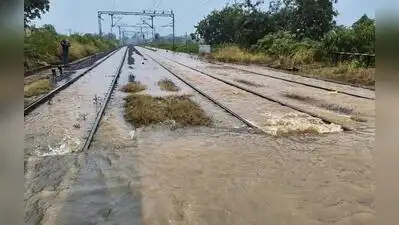
Trail of devastation in wake of Arnab
“A tropical cyclone requires sea surface temperatures (SSTs) of at least 26.5°C extending to a depth of several tens of meters. The rapid succession of Cyclone Arnab (which struck the Andhra coast on Oct 28) and Cyclone Murasu (due to make a landfall between Monday midnight and Tuesday morning) within a span of less than seven days is an exceptionally rare meteorological event, they said.
Kolkata: Two cyclones — Arnab and Murasu — forming and hitting the same area in less than a week is a ‘climatological anomaly’ that has rarely happened along the Bengal-Odisha-Andhra coast, said weather scientists. If a storm follows too closely, it runs into this cooler water and is starved of the thermal energy it needs to intensify,” said a senior weather scientist. Back-to-back systems on the east coast could be triggered by an ‘over-energised’ Bay of Bengal, said meteorologists.
Tropical cyclones are giant atmospheric heat engines. For a back-to-back formation to happen, the environment must overcome several strict thermodynamic and dynamic barriers like an oceanic heat depletion . When a powerful cyclone tracks slowly across the Bay of Bengal, its violent winds churn the upper ocean layer, upwelling deep, colder water from below. This effectively leaves a ‘cold wake’ in the ocean. For a second cyclone to form right behind it, the ocean needs time to recover and regain solar heat. Cyclones require low vertical wind shear — the winds at the surface and high up in the atmosphere must blow at similar speeds and directions so they don’t tilt or tear apart the storm’s vertical vortex. A passing cyclone drastically alters regional wind fields. Often, the trailing tail of a weather system leaves behind high wind shear or disruptive upper-level troughs that tear apart fledgling disturbances nearby. “Late in the post-monsoon season, the accumulated solar heating from the entire summer has baked the Bay of Bengal, creating a massive pool of high thermal energy. Even after one storm upwells cooler water, the background temperature of the basin remains high enough to fuel another. You Can Also Check: Gold Rate in Kolkata | Silver Rate in Kolkata | Bank Holidays in Kolkata | Public Holidays in Kolkata | Kolkata AQI | Weather in Kolkata | Petrol Price in Kolkata | Diesel Price in Kolkata | CNG Price in Kolkata | LPG Price in Kolkata