
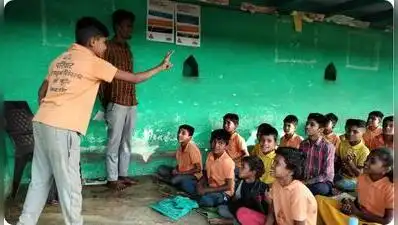
File pic of students part of Shikshagraha
The research involved interviews with 30 stakeholders from the Shikshagraha movement, focus groups and the wider education ecosystem, including current and former govt officials, civil society organisations and philanthropic donors. You Can Also Check: Gold Rate in Bengaluru | Silver Rate in Bengaluru | Bank Holidays in Bengaluru | Public Holidays in Bengaluru | Bengaluru AQI | Weather in Bengaluru | Petrol Price in Bengaluru | Diesel Price in Bengaluru | CNG Price in Bengaluru | LPG Price in Bengaluru Stay updated with the latest Bengaluru news.
The report, titled Orchestrating Education System Change: Insights from the Shikshagraha Movement, is part of a wider research partnership between the two organisations examining how govts and civil society can support “meaningful, community-led change in public services”. As per the report, govt and civil society have “distinct but complementary roles” in taking education reform to scale. “Overdependence” on external organisations, multiple initiatives that burden schools, and competition or rigidity among partners can weaken rather than strengthen public systems, the report stated. SD Shibulal, Infosys co-founder and founder of ShikshaLokam, said transforming public education requires the “combined and coordinated effort” of govt, civil society, communities and philanthropy. “No single sector can do it alone,” he said. Professor Stefan Dercon of the University of Oxford said education reform has for decades focused largely on what govts should do differently, while underestimating implementation. “An essential ingredient for successful implementation is high-quality relationships between govt and communities, civil society organisations, and local leaders who together determine whether any of it actually reaches a child,” he said. Khushboo Awasthi, chief curator of Shikshagraha and co-founder of ShikshaLokam, said India doesn’t have an “education-solutions problem” but a “system-change problem”. “The real challenge is creating the conditions for these efforts to connect, learn from one another, adapt to local contexts and contribute to lasting change at scale,” she said.
Bengaluru: City-based ShikshaLokam and the University of Oxford’s Govt Outcomes Lab have developed a playbook on how govt and civil society can work together to drive change in public education, drawing on lessons from the Shikshagraha movement led by ShikshaLokam. It marks the culmination of the first year of the collaboration. Using Shikshagraha as a case study, the research identified three considerations for effective state-society partnerships: clarity of roles, working with the system, and building trust among different actors. This was supplemented by field research in Karnataka , Delhi, Bihar and other states. Civil society can bring local knowledge, experiment with new approaches, and respond to diverse contexts, while govt has the mandate and ability to embed successful interventions across the public system. However, poorly designed partnerships can undermine change. Shikshagraha is supported by Shibulal Family Philanthropic Initiatives. The report stated that trust must be built through credibility, demonstrated impact and transparent communication, including a willingness among partners to voice disagreements and acknowledge when things go wrong. Download the TOI App.