
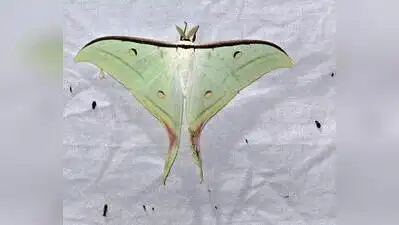
Indian Moon Moth found near Kanyan
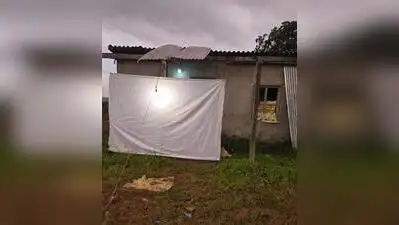
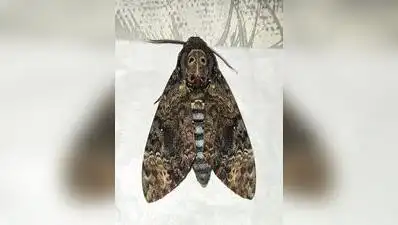
A light trap set up during a moth survey in a plantation area of Dakshina Kannada. Death head hawk moth Indian Moon Moth found near Kanyan A light trap set up during a moth survey in a plantation area of Dakshina Kannada. Death head hawk moth Indian Moon Moth found near Kanyan Mangaluru: By night, plantations in Dakshina Kannada become unlikely laboratories, as researchers use light traps to lure moths that remain largely invisible during the day. Some may turn out to be crop pests, while others could add to the list of species known to science. A Zoological Survey of India (ZSI) team is documenting moth diversity across the agro-ecosystems of the Southern Western Ghats, with its latest fieldwork taking it through plantations in Sullia and Belthangady. The specimens collected in Dakshina Kannada are now awaiting detailed laboratory examination to determine their identities.
India has more than 13,000 recorded species of Lepidoptera, the order comprising moths and butterflies, Kalawate said, with new species continuing to be discovered. She also observed a good population of ladybird beetles and said farmers she interacted with generally reported limited pesticide use, with some relying on natural methods. Stay updated with the latest Mangaluru news.
She said it was too early to say whether the Dakshina Kannada survey had yielded a species new to science, as the collected specimens are yet to be examined. BOX Rich diversity noticed in DK Dr Kalawate said Dakshina Kannada showed considerable biodiversity during her recent field visits. The areas visited were green and appeared to have relatively low pollution, she said. Dr Kalawate said habitat destruction and light pollution remain concerns, particularly in urban areas While no immediate major threats were observed at the survey sites.
Dr Aparna Sureshchandra Kalawate of ZSI’s Western Regional Centre, Pune, is leading the three-year study, which covers parts of Kerala, Karnataka and Tamil Nadu. The project, currently in its second year, is funded in-house by ZSI and focuses particularly on micro-moths — many of them so small and cryptic that identifying them requires microscopic examination. During the latest survey, the team visited plantations and interacted with farmers before setting up light traps to attract nocturnal moths. The insects were observed, photographed and collected for further study. Back in the laboratory, the process becomes considerably more painstaking. Specimens are preserved, stretched and mounted before being examined under a microscope. Laboratory photographs and, in some cases, DNA barcoding are also used to establish their identity. Kalawate described the process as an integrated taxonomic approach. A survey in Kerala, for instance, yielded the mango shoot borer Chlumetia. Kalawate has also described two new moth species — Antaram Idukki from Idukki and Mimeusemia Kali from the Kali Tiger Reserve. The study is not merely about adding names to a species list. Micro-moths are closely associated with agricultural, forestry and horticultural crops and include both major and minor crop pests. At the same time, moths play important ecological roles as pollinators, a food source for other animals and indicators of changes in habitats. Silk moths also have direct economic importance, with the sericulture industry depending on them. The first year of the project covered parts of the Western Ghats in Tamil Nadu and Kerala. The first survey of its second year was conducted in Dakshina Kannada, with fieldwork planned in Udupi and Chikkamagaluru around October-November. She observed the endemic Buddha peacock butterflies, blue Mormon butterflies, and an Indian monitor lizard in the Dharmasthala area. Download the TOI App.
Surveys, however, often result in new findings, including the identification of previously unrecorded pest species.