
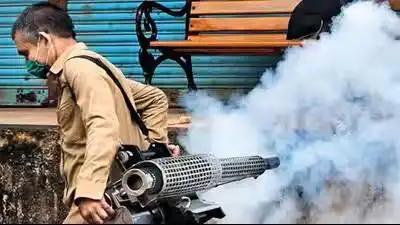
Between Sept 1 and Sept 15, Mumbai reported 1,499 cases of malaria, 598 cases of dengue and 13 cases of chikungunya
Mumbai: During the first half of Sept, vector-borne illnesses surged at an alarming pace across Mumbai, with malaria and dengue cases reported in just the first 15 days of the month already reaching over half of the total counts recorded for the entire month of Aug. Between Sept 1 and Sept 15, 1,499 cases of malaria (2,450 in Aug), 598 cases of dengue (831 in Aug), 13 cases of chikungunya (32 in Aug), 22 cases of leptospirosis (144 in Aug), 96 cases of gastro (500 in Aug), and 47 cases of H1N1 (336 in Aug) were recorded. “I have had chikungunya patients who have been following up with me for a year due to complications.
Doctors said they have also been seeing co-infected patients. Then it is very difficult to treat,” he said. The health department said the areas of E Ward (Hans Road, Madanpura Road, Agripada), L Ward (Indira Nagar, Bharati Nagar and Barve Nagar), P East Ward (Gandhi Nagar, Kurar Village, Appa Pada), N Ward (M G Road, R B Mehta Road, Ramabai Colony), S Ward (Tagore Nagar, Ambedkar Nagar, Sonapur and Tulshet Pada) have been seeing most cases of dengue, malaria and chikungunya. Dr Manjusha Agarwal, a senior consultant in internal medicine at Gleneagles Hospital, said she noticed a steady uptick in chikungunya, which carries a lot of long-term morbidity.
Dr Gautam Bhansali, a senior consultant physician at Bombay Hospital, has seen patients rushing in with both dengue and malaria simultaneously. “One falciparum malaria patient had to be in the ICU a couple of weeks ago. This can happen when patients arrive late with high-grade fever, shivering, and a drop in platelet count. Dr Hemlata Arora, internal medicine specialist at Nanavati Hospital, added that hospitalisation for both dengue and malaria has seen a spike. Dengue and malaria can still be managed quite well medically.”