
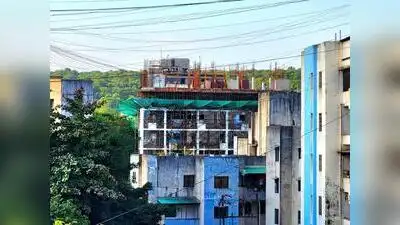
A redevelopment project in Pune
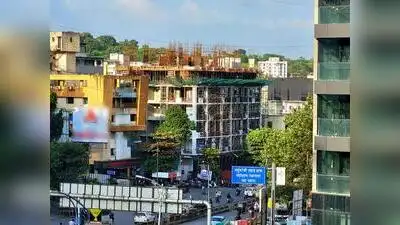
A redevelopment project in Pune A redevelopment project in Pune A redevelopment project in Pune A redevelopment project in Pune Pune: At 90, A V Kulkarni and his wife hoped the redevelopment project would give them a safer, more accessible home. Instead, they have rented a house for Rs 45,000 per month while their 40-year-old building on Bhandarkar Road takes shape. They now live with the thought that they can ever see their new home.
Yet they have to make decisions involving collectively valuable assets, experts explain Problems can begin at the feasibility stage or during developer selection and become difficult to rectify once a poorly negotiated development agreement is signed. You Can Also Check: Gold Rate in Pune | Silver Rate in Pune | Bank Holidays in Pune | Public Holidays in Pune | Petrol Price in Pune | Diesel Price in Pune | CNG Price in Pune | LPG Price in Pune Stay updated with the latest Pune news.
The challenge, experts said, is to frame a state-wide policy that addresses the state’s future redevelopment needs rather than focusing only on Mumbai. CREDAI Pune president Manish Jain said redevelopment is important in Pune’s urban growth by renewing older developments, improving infrastructure and making better use of the existing land. “As Pune is still in a learning phase with large-scale redevelopment, it is important for societies to carefully assess the experience, financial capacity and ability of the developer and professional partners to take a project through to completion,” he said. A transparent, collaborative and professionally managed approach is essential to ensure redevelopment delivers meaningful value to all stakeholders,” Jain said.
Redevelopment is most prominent in cities that urbanised early and now have large stocks of ageing buildings. Mumbai leads the trend, followed by Thane, Pune and Navi Mumbai. Problems begin before builder arrives Many property owners are unaware of the actual value and development potential of their property. Society members are homeowners, not experts in FSI, TDR, RERA, project finance, taxation, construction, tendering or contracts. Promises of additional area, corpus or rent cannot substitute for due diligence on a developer’s financial capacity, technical competence, completed projects and ability to execute the project. There is planning, stakeholder discussions, approvals and execution and the overall journey can be lengthy. A project may take around three to five years from planning to completion, depending on its scale, complexity, approvals and on-ground factors. “Once a project commences, timelines should be clearly defined and professionally managed. Wanted: A single window that works State Housing Federation has proposed a single-window system for redevelopment approvals, involving integration of departments, technology-driven scrutiny and time-bound approvals. Routine permissions that can be subjected to automated scrutiny should be processed almost instantly wherever possible. Every month saved can reduce interest costs, transit rent and construction-cost escalation. The Housing Federation has also proposed balanced model templates for development agreements covering different redevelopment models. minimum safeguards for societies and developers, obligations, timelines and consequences of default could be standardised While commercial terms would remain negotiable. Download the TOI App.
There is the additional burden of Rs 45,000 rent which we have to bear as the builder will not pay it until all residents sign the agreement and the building is demolished. A 75-year-old widow living alone faces a similar uncertainty over the proposed redevelopment of her society on Fergusson College Road. Manohar Deshpande, 76, director of Housing Federation, said redevelopment is an issue for senior citizens and that he has encountered several such cases during visits to housing societies. “Even if there is a 51% majority and redevelopment can be started, a single member is enough to create an obstacle. Forty- to 50-year-old houses have owners between 70 and 75, who go through mental agony. The long cost of waiting Trupti Joshi, 60, a resident of an apartment building near Tathawade Garden in Karvenagar, said redevelopment proposals were discussed for two years, but the agreement with the developer has not been signed.
Because of all these complications, we do not know when the building will be demolished or when work will start. Residents in their seventies, eighties or nineties often feel they won’t live that long to see the promised home.
We are in our 90s and not sure we will live long enough to see the new house as redevelopment takes years,” Kulkarni said. The other fear is whether I will see the day,” she said. “Many people don’t factor in the rise in property taxes and maintenance when they agree to redevelopment,” she said. In one joint redevelopment project, he said, the developer had included a plot that was not with the society while calculating the total area and promised additional space to its members. If that member says ‘I don’t want it’ and approaches the court, the redevelopment stops,” Deshpande said. In other societies, he said, plans may be sanctioned and preparations completed, but is a lone member refuses to vacate the premises, it can halt redevelopment. Families have grown and there is insufficient financial capacity to buy a new flat, resulting in friction between the many generations living under one roof,” Deshpande said. Since we there is no agreement with the developer, we have to pay the rent,” Joshi, who lives with her retired husband, said. From option to urban necessity Shreeprasad Parab, a legal expert with State Housing Federation, said with developable land becoming scarce and housing demand rising, cities were increasingly vertical and redevelopment was necessary as residents get larger and safer homes and modern amenities while additional housing stock is created without requiring large tracts of new land. The complexity, Parab said, stems from redevelopment involving legal, financial, technical and social issues. “The success of redevelopment should not be measured simply by the height of the new building, but by whether existing residents are able to return to their homes safely, fairly and on time,” he added.
The old building has no lift and leaks and it is increasingly difficult for the elderly couple to live there. The society found a builder and an agreement is expected soon, but some members have refused to vacate, forcing the society to approach the court. “Everything is in a state of flux now. His experience highlights a less-discussed cost of redevelopment in the state’s ageing housing stock. The small building has an interested developer, but legal complications have delayed the process. “I have undergone surgery for stomach cancer and cannot climb stairs. The development plan is good, but there are no set timelines. I am not comfortable moving all my furniture to a new place and moving back when the new building comes up. She is also worried that a rented home may not offer the same ease of living as her existing flat. For many housing societies, redevelopment can become entangled in disputes between members, developers and legal heirs, with one unresolved issue holding up an entire project. The discrepancy surfaced later, bringing the project close to a halt. The society is then forced to approach the court. Succession disputes add another layer of uncertainty. After the death of an original member, societies may discover that the nominee recorded in their documents and the legal heir is different. In some cases, heirs themselves dispute ownership or their respective shares. What begins as a family dispute can become a problem for the society, delaying redevelopment for every resident. Individual members may also demand more area than they are entitled to and approach the court when it is rejected. Elderly residents in ageing buildings are caught in the riptide and the consequences are difficult. “In all this, common members are left hanging. Their buildings have no lifts, the houses leak and the staircases are dangerous. Legalities that delayed the process have now been completed and the plan is moving forward, with the agreement expected in six months. “But during the last few years there was no clarity. We could not carry out refurbishments in our home during that period. The interiors deteriorated and it became difficult to live here. So we pre-emptively relocated to a rented apartment in Nanded City. Though Maharashtra has successful redevelopment projects, there are many stalled projects, disputes between societies and developers, disagreements among members, approval delays and prolonged litigation. Thousands of redevelopment-related matters are pending before courts and authorities, with a substantial number before Bombay high court.