

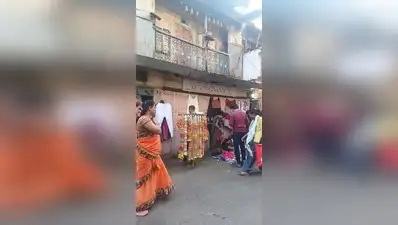
A vendor selling decorative items at Ravivar Peth in Pune
Rai devotes 12 to 18 hours a day to work to meet peak demand. Ram Suresh (35), a migrant worker from Mirzapur in Uttar Pradesh, has arrived this season for the eighth consecutive year. He earns Rs1,200 a day.
I travel across India to Uttar Pradesh, Madhya Pradesh and Rajasthan, for work during the festive season,” he says. “Some workers have been coming to Pune for at least 14 years, three times a year, for Vasanti puja, Basant Panchami and Durga Puja,” said Anup Dutta, general secretary at Pune Kali Bari. “I find it difficult to save money for myself and send something home, but I have to manage,” he says.
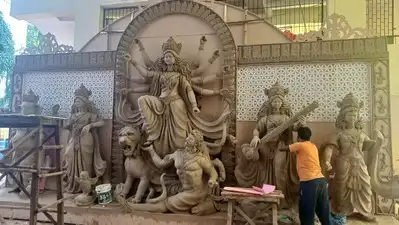
Workers at the Kali Bari Durga Puja pandal, Range Hills A sculptor working on a devi idol at Bangiya Sanskriti Samsad, Bhosale Nagar A vendor selling decorative items at Ravivar Peth in Pune Workers at the Kali Bari Durga Puja pandal, Range Hills A sculptor working on a devi idol at Bangiya Sanskriti Samsad, Bhosale Nagar A vendor selling decorative items at Ravivar Peth in Pune Pune: They build pandals, paint idols, install lights, assemble decorations and stock markets with seasonal goods, moving between jobs ahead of the festive season. For workers who migrate from across the country to keep the city’s festive calendar running, the months leading to Navaratra offer a concentrated stretch of work and an opportunity to earn a little more. At Bangiya Sanskriti Samsad in Bhosale Nagar, sculptor Uday Rai from West Bengal arrived in the city right before Ganeshotsav. He is busy painting Durga idols for pandals, including the installation at Congress Bhavan in Shivajinagar. “This is my first time here. Together with paints and other raw materials that he brings along from West Bengal, Rai is accompanied by his skills in art. At Pune Kali Bari in Range Hills, migrant workers prepare the stage, embellish decorations and install lighting for Durga Puja . Contractors pay the workers, while organisers provide accommodation during their stay. For many, the work continues as the pandals need to be dismantled after festivities are over. His working year is organised around opportunities across cities and occasions, be it Ganeshotsav, Durga Puja, Tulsi Vivah or wedding decorations rather than a single festival.
Dharmendra, a 37-year-old entrepreneur from Prayagraj, spends about 10 hours a day selling decorations in Ravivar Peth. Of the Rs10,000 he earns in a month, he’s hardly left with much after paying rent and providing for his family. For the 27 workers at the Congress Bhavan Durga Puja, the city has become a place to build relationships as well as earn.
You Can Also Check: Gold Rate in Pune | Silver Rate in Pune | Bank Holidays in Pune | Public Holidays in Pune | Petrol Price in Pune | Diesel Price in Pune | CNG Price in Pune | LPG Price in Pune Stay updated with the latest Pune news.
“The city offers work, but living here is expensive,” he says. Manaj, from Baruipur in West Bengal, said they all take turns cooking and often travel home together after the season. The festive economy also extends to Pune’s retail markets. At Laxmi Road and Ravivar Peth, vendors come from all over the country to sell decorative lights, diyas, dandiya sticks and ghagra cholis as shoppers prepare for Navaratra and Diwali. For migrant workers, the festive season offers a recurring source of income and a reason to return to Pune every year. For Pune, their work underpins city-wide celebrations. Download the TOI App.