
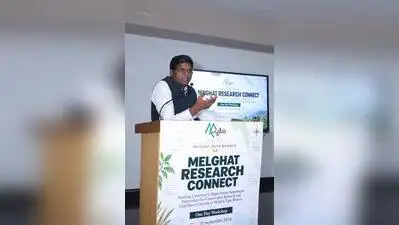
On Wednesday, the Forest Department conducted a one-day workshop titled ‘Melghat Research Connect 2026’ at the Dr. Panjabrao Deshmukh Administrative Academy (Prabodhini) in Amravati. This initiative aims to enhance field-based conservation research efforts in the region.
Around 80 faculty members, including professors and associate professors from colleges across Amravati, Akola, Washim and Buldhana districts participated enthusiastically. The workshop was organised with the objective of promoting a scientific approach to conservation and enhancing collaboration between universities and the Forest Department. The vision is to develop the Melghat Tiger Reserve as a ‘Living Field Laboratory’ for conservation research. The workshop brought together faculty members, researchers, forest officials, experts and students to deliberate on interdisciplinary approaches to wildlife research, field-based research opportunities and practical application of research findings in conservation management. The concept envisages a long-term partnership between the Forest Department and academic institutions for small, scientifically rigorous and management-oriented research. The interaction helped connect academic expertise with field requirements of Melghat and identified research interests, potential faculty mentors and opportunities for collaborative research involving undergraduate, postgraduate and research students. Special emphasis was laid on research opportunities in Melghat for MSc dissertations, undergraduate projects, Ph.D. research, summer and winter internships, short-term biodiversity surveys and field-based training. Potential themes include biodiversity documentation, grassland and meadow ecology, fungi and mushrooms, birds, butterflies, amphibians and reptiles, pollinators, invasive species, riparian ecosystems, fire ecology, regeneration, human-wildlife interactions, visitor management and One Health studies. The initiative aims to link students and researchers with the Forest Department’s field experience and conservation priorities, promoting research that is both scientifically meaningful and directly relevant to management.
Establishing the Melghat Research Network for Conservation
The Melghat Research Network is set to connect various stakeholders, including the Forest Department, universities, research institutions, students, local communities, and citizen scientists. This initiative aims to streamline the identification of key research questions, enhance field coordination, and facilitate mentorship and data sharing.
The network’s approach is centered around three core pillars: Conservation, Research, and Collaboration. This framework is designed to provide institutional support to scientific research, ensuring that findings are effectively translated into conservation management practices.