The city’s air quality index (AQI) has improved notably, dropping from 99 last year to 76 this year. This positive change indicates a healthier environment for residents and visitors.

The city’s air quality index (AQI) reportedly improved from last year’s 99 to 76 this year The city’s air quality index (AQI) reportedly improved from last year’s 99 to 76 this year The city’s air quality index (AQI) reportedly improved from last year’s 99 to 76 this year The city’s air quality index (AQI) reportedly improved from last year’s 99 to 76 this year The city’s air quality index (AQI) reportedly improved from last year’s 99 to 76 this year The city’s air quality index (AQI) reportedly improved from last year’s 99 to 76 this year The city’s air quality index (AQI) reportedly improved from last year’s 99 to 76 this year The city’s air quality index (AQI) reportedly improved from last year’s 99 to 76 this year Chhatrapati Sambhajinagar : The city has leapt 18 places to finish 16th among 48 cities with populations above 10 lakh in the Centre’s Swachh Vayu Sarvekshan 2026, scoring 178 out of 200 points, civic officials said. Last year, the city was ranked 34th with 155 points. Civic chief Amol Yedage said the city’s score rose by 23 points alongside its 18-place jump in ranking. The city’s air quality index (AQI) reportedly improved from last year’s 99 to 76 this year.
Stay updated with the latest Chhatrapati Sambhajinagar news.
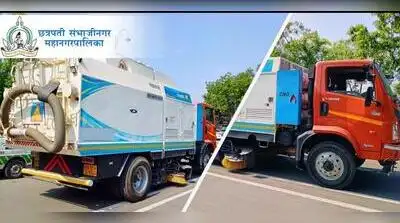
“The civic body would now focus on further curbing major pollution sources, promoting green transport, strengthening waste management and boosting citizen participation to push the city higher in future editions of the survey,” he said. “Road dust, a major contributor to air pollution, has been tackled through regular and mechanical cleaning, besides removal of accumulated soil and dust to prevent its resuspension by vehicular movement,” CSMC deputy commissioner Nandakishore Bhombe said. Civic officials said the civic body has also shifted to enclosed vehicles for garbage collection and transportation. The system has helped prevent spillage, odour and particulate emissions during transportation,” an official said. Authorities said teams from the solid waste management department and Nagrik Mitra squads are conducting inspections and taking action against open garbage burning, littering, improper waste management, use of banned plastic and other violations. “Awareness campaigns are being conducted alongside punitive action, particularly to highlight the impact of smoke and fine particles generated by burning waste,” the official said. Yedage said that the civic body has also increased the use of electric vehicles for door-to-door garbage collection.
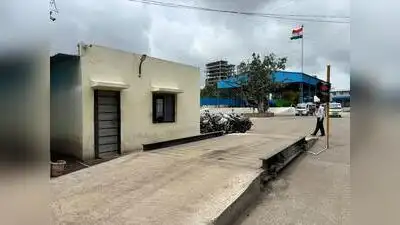
The improvement has been attributed to measures including road-dust control, scientific waste management, prevention of garbage burning, enclosed waste transportation, greater use of electric vehicles , construction-dust control, pollution-control measures and environmental awareness campaigns. “Under the refuse transfer station (RTS) system, waste collected from different parts of the city is taken to transfer stations and then transported to processing facilities in large, enclosed capsule vehicles. Since these vehicles have no tailpipe emissions, their use is expected to reduce local pollution and dependence on conventional fuels. Download the TOI App.