
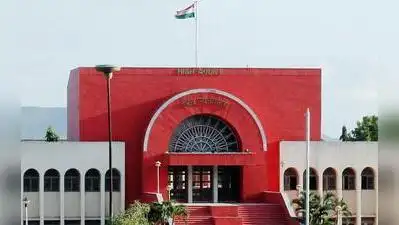
Aurangabad bench of Bombay high court
Chhatrapati Sambhajinagar: Aurangabad bench of Bombay high court has quashed a Dhule collector’s order disqualifying a 60-year-old sarpanch, holding that a sarpanch cannot be disqualified solely for failure to hold monthly gram panchayat meetings. Section 36 of the Act provides that if the sarpanch, or the upsarpanch acting in the sarpanch’s absence, fails without sufficient cause to convene the gram panchayat meeting in the same financial year in accordance with the prescribed rules, the person is disqualified from holding office, as applicable, for the remainder of the term. Justice Manjusha Deshpande held that the Dhule collector’s jurisdiction under Section 36 was confined to deciding whether the sarpanch failed to hold monthly meetings without sufficient cause.
“It must be shown that the failure was deliberate and that the meetings could have been held but were not,” the HC ruled in its order dated Oct 21, overturning the Jan 3, 2025, order of the Dhule collector disqualifying Dhamane sarpanch Meenabai Vithal Thakre from holding office for the remainder of her term ending in 2027 under Section 36 of the Maharashtra Village Panchayats Act, 1959, and rules thereunder. “Observations on the lack of signatures on minutes or poor record-keeping are beyond that scope and cannot be grounds for disqualification,” the HC observed.
Citing settled law laid down in earlier judgments, the court observed that mere non-holding of meetings did not automatically lead to disqualification.
The collector had concluded that monthly meetings were not held in July and Nov 2023, holding that Thakre had failed to show sufficient cause. Thakre relied on letters sent to district authorities in July and Dec 2023 raising these concerns, one of which was signed by eight of the village’s 10 elected members. Both disputed meetings fell during Rajput’s tenure between April and Dec 2023.
Stay updated with the latest Chhatrapati Sambhajinagar news.
Rajput was frequently absent, failed to issue meeting notices and agendas, and had taken away the proceedings register, making it impossible to conduct meetings, according to the defence. Stressing that proof of absence of “sufficient cause” was a mandatory requirement under Section 36, the court held that Thakre had satisfactorily explained why the meetings could not be held. The action against Thakre stemmed from a complaint by villager Ramesh Mohan Baisane and a report submitted by the block development officer. Challenging the order, advocate Jitendra Patil argued that the inquiry was one-sided and ignored the role of the then gram sevak, Bhagwan Rajput. Justice Deshpande noted that under the relevant rules, the gram sevak, acting as secretary, was responsible for issuing notices for meetings, a prerequisite for convening them. Significantly, the collector himself had recorded findings that Rajput failed to maintain records properly and had recommended a departmental inquiry against him. The HC found it contradictory to hold the sarpanch responsible for lapses that the administration had attributed to the gram sevak. Setting aside the collector’s order, the court restored Thakre’s position as sarpanch, reinforcing that disqualification could not rest on technical defaults unless deliberate dereliction of duty was established. Download the TOI App.