
Rain
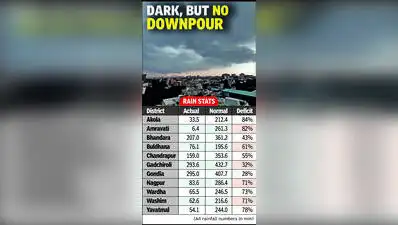
Nagpur: An exceptionally dry August has intensified monsoon concerns across Vidarbha, with the region recording a massive 58% rainfall deficit during the month. Vidarbha received only 125.5mm of rainfall against the normal 297.1 mm, resulting in a 58% deficit, according to rainfall data from August 1 to August 31. Nagpur’s seasonal rainfall stood at 538.3 mm against the normal 777.6 mm, reflecting a 31% deficit, one of the highest in the region. Amravati recorded the largest seasonal shortfall at 38%, followed by Akola (34%). Nagpur district recorded just 83.6mm rainfall during August against a normal of 286.4 mm, registering a steep 71% deficit. The district was among the worst affected in the region, alongside Wardha and Washim, which also recorded deficits of around 71%. Akola and Amravati experienced deficits of 84% and 82%, respectively, while Yavatmal recorded a 78% shortfall. Wardha reported a deficit of 73%, underscoring the widespread nature of the rain deficiency across the region. Between June 1 and August 31, the region received 607.1mm rainfall against a normal of 781.8mm, leaving Vidarbha with an overall 22% seasonal deficit.
Nagpur district received barely a third of its normal rainfall in August while the IMD had predicted above-normal to normal rainfall for parts of Central India including Vidarbha during the period. A strong El Niño pattern over the Pacific Ocean has been associated with suppressed monsoon activity across several parts of India, leaving large areas of the country, including Vidarbha, drier than normal. The sharp decline in rainfall during August, usually one of the wettest phases of the monsoon, has raised concerns over crop health, reservoir storage, and groundwater recharge. The rainfall situation was particularly alarming in western Vidarbha. Agriculture experts say the prolonged dry spell during August may affect standing soybean, cotton and paddy crops, which depend on consistent monsoon rainfall during the growth stage. Reduced rainfall has also limited runoff into reservoirs and curtailed groundwater recharge across several districts. The weak August rainfall further widened the cumulative monsoon shortfall in Vidarbha.