
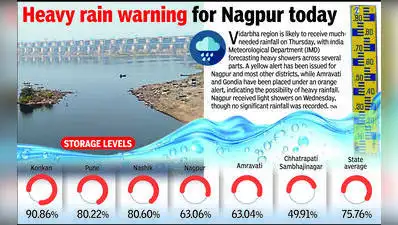
Nagpur: Water storage in Vidarbha’s reservoirs has decreased to approximately 63%. This decline raises concerns about water availability as the region continues to experience a deficit in rainfall. The situation is particularly critical as the months ahead may see heightened demand for water resources.
Between June 1 and August 31, Vidarbha recorded around 607.1 mm rainfall against the normal 779.8 mm, leaving a 22% cumulative deficit. The deficit during August alone was much sharper at 58%. Nagpur division currently has 63.06% water storage, while Amravati division has 63.04%. The rainfall deficit has affected 31 of Maharashtra ’s 36 districts, with several districts recording deficits of between 40% and 66%.
With monsoon entering its final phase, the situation is particularly worrying for farmers, with little likelihood of substantial recovery in rainfall during September. The region received its highest rainfall of the monsoon in August, helping improve water storage in several regions. However, the improvement has been uneven. The situation is more serious in several districts of Vidarbha. Rainfall has remained below normal in most districts, while the region’s reservoirs have also failed to receive adequate inflows. In Vidarbha, districts including Yavatmal, Buldhana, Akola, Washim, Amravati, Wardha, Nagpur and Chandrapur are among those facing significant rainfall deficiency.
With September expected to provide little relief, the rainfall deficit could have a direct bearing on agricultural output and water availability in the months ahead. The poor water storage comes amid the lingering impact of El Niño-related weather patterns, which have contributed to erratic and deficient rainfall across parts of central India. With monsoon showing prolonged dry spells and September unlikely to bring substantial recovery, officials and farmers are keeping a close watch on reservoir levels. The combination of a rainfall deficit and lower-than-normal inflows could put additional pressure on water availability for irrigation and drinking purposes in the post-monsoon months.
Pingback: With only 34% water storage left across 83 reservoirs, authorities: The wider industry