
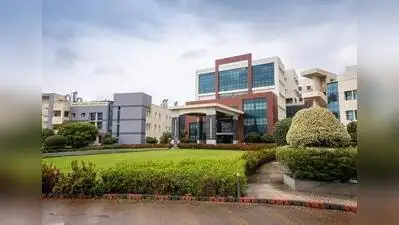
IISER PUNE
Due to its moderate bandgap, environmental stability, robust ferroelectricity, ultra-high mobility, and high responsivity, this novel material felt highly feasible for flexible electronics. As electronic gadgets shrink, conventional semiconductors are approaching their physical limits. Hence, scientists are looking at materials which are much smaller in size, two-dimensional (2D) materials, which are only a few atoms thick, which can one day replace semiconductors. That is where Bi2O2Se comes in. To overcome this, the IISER team carefully controlled gas flow rate, precursor ratio, reaction time, temperature, and oxygen levels. “Temperature decides how fast atoms move. Too cold, and they freeze in place; too hot, and they fall apart. Oxygen decides what compound actually forms. If oxygen is missing or mistimed, you get the wrong material altogether. Getting both just right was key to making large, clean sheets. In simple terms, we gave the atoms enough time, space, and energy to find the right partners and spread out smoothly, rather than forming lots of tiny islands. The research team included Avinash Mahapatra (PhD student), Sudipta Majumder (PhD student), HL Pradeepa (post-doctoral researcher), Pawan Kumar Gupta (PhD student), Shrikrishna Bhagwat (PhD student), Shivprasad Patil (faculty member), and Rahman.