
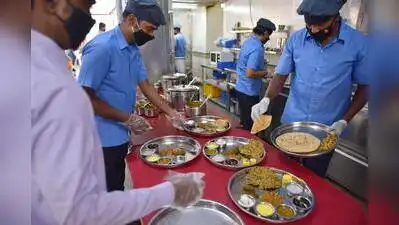
Photo for representation
They may have storage tanks with a capacity of only 3,000 to 5,000 litres, and thus would have to pay for tanker water,” the restaurateur said. “Menu price revisions have therefore become necessary to partially offset these escalating costs and ensure that hotels can continue to maintain food quality, hygiene standards and service excellence. However, the industry remains conscious of guest expectations and price sensitivity, and any revision is undertaken after carefully evaluating market conditions, competition and overall value delivered to the guest. The objective is not simply to increase prices, but to ensure long-term operational sustainability while continuing to offer guests a quality dining experience and value for money,” Sharma added. Water supply could further increase operating costs for smaller establishments as drought-related restrictions lead to cuts. Restaurants with limited storage capacity may have to rely on private water tankers, adding to their expenses. “If the water supply is cut for a day, smaller restaurants without adequate storage will have to arrange for tankers. You Can Also Check: Gold Rate in Pune | Silver Rate in Pune | Bank Holidays in Pune | Public Holidays in Pune | Petrol Price in Pune | Diesel Price in Pune | CNG Price in Pune | LPG Price in Pune
Restaurants that previously revised their menus every four to seven months were now having to consider monthly price revisions, the restaurateur added.
We can easily see menu revisions happening over the next eight to 10 days. The proposed hikes could be anywhere between 10% and 15% of the current price range,” Jahagirdar said. Vijay K Shetty, president of the Indian Hotel and Restaurant Association (AHAR), said the current menu price revision was driven by a sharp increase in operating costs, including a 100% rise in commercial LPG cylinder prices, higher milk and dairy prices, rising wages and increased commercial rents. Rahul Ramnath, founder-member of the United Hospitality Association, Pune, said restaurants were preparing for a menu price hike of at least 12-15%, with increases on some items potentially reaching 18%.
Restaurants are also considering raising alcoholic beverage prices following revisions in excise fees, said Saili Jahagirdar, Pune chapter head of the National Restaurant Association of India (NRAI). The industry had expected prices to stabilise by Diwali, but this has not happened, she said, adding that restaurants were now preparing to revise their menus ahead of the festival. “The drought could have a much larger impact, and there are strong chances of further price revisions in the days to come,” he said. “While restaurants typically revise prices in Jan to account for inflation, the industry may bring forward the exercise to Nov this year,” he said, adding that the drought in Maharashtra was one of the major factors behind the anticipated increase, alongside the impact of the recent war on costs. Amit Kumar Sharma, former president of the Poona Hoteliers Association & EC member of HRAWI, said, “The hospitality industry is witnessing considerable inflation in food and beverage commodity prices, particularly vegetables, fruits and other essential ingredients.
The increase would add to the burden on diners following recent menu price hikes. “Raw material prices are not just shooting up, they are shooting up exponentially. Shetty, however, indicated that the current revision might not be the last, as the impact of Maharashtra ’s drought on vegetable prices and other costs could necessitate a further hike. The underperformance and uneven distribution of the monsoon have affected agricultural output and supply chains, contributing to a sharp rise in vegetable prices and increased volatility in the cost of fresh produce. This has added significant pressure on the operating costs of hotels and restaurants. In addition to fresh produce, rising prices of dairy products, edible oils, poultry, meat, seafood and other essential commodities, coupled with increasing manpower and energy costs, have made it increasingly challenging for hotels to maintain existing menu prices.”