
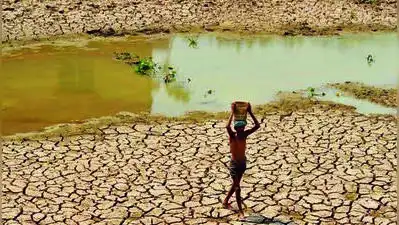
Pune: The state animal husbandry department has launched ‘Mission Murghas’ to promote scientific fodder conservation, as drought threatens fodder availability and milk production. The initiative will focus on Marathwada and Vidarbha, where dairy farming is considered a reliable source of rural income.
Under the ‘Magel Tyala Murghas’ scheme, eligible milk producers and livestock owners in 19 districts across the two regions can receive a subsidy of Rs 3 per kg of silage purchased. The subsidy is calculated based on a requirement of five kg per animal per day for 90 days. “The state has also sanctioned an additional Rs 76.41 crore for fodder cultivation and silage production amid the prevailing shortage. This is over and above the Rs 51.20 crore already allocated for fodder seed distribution under the 2026-27 kharif season and the dairy development project,” Patil added. Maharashtra has declared drought in 305 talukas, raising concerns over the availability and cost of livestock feed. The state’s milk production reached 166.26 lakh metric tonnes in 2024-25, according to the Maharashtra Economic Survey 2025-26. Implemented with the National Dairy Development Board (NDDB), the Vidarbha-Marathwada Dairy Development Project had expanded its procurement network to 3,411 villages and covered around 35,000 milk producers by Feb 2025. Average milk procurement stood at approximately 4.5 lakh kg per day.
“The scheme has been launched in these two regions, which are reeling under severe drought, and fodder has become a major concern for farmers, particularly dairy farmers. So, we launched this scheme to help farmers sustain themselves during this extraordinary crisis,” Kiran Patil, animal husbandry commissioner, told TOI. The initiative is part of the second phase of the Vidarbha-Marathwada Dairy Development Project. The campaign aims to encourage farmers to convert available green fodder into silage using scientific methods, helping them maintain animal nutrition and milk production during periods of scarcity. A shortage of nutritious fodder can reduce milk yields, increase the cost of maintaining cattle and buffaloes, and erode the earnings of households dependent on dairy farming. Fodder security crucial for dairy incomes The importance of the initiative is underscored by the scale of Maharashtra’s dairy economy. Dairy farming provides supplementary income and employment to rural households, particularly small and marginal farmers. Vidarbha and Marathwada have considerable potential to expand milk production, but inadequate fodder availability and nutritional stress remain major challenges. milk sales can provide more regular earnings, making fodder security particularly important during drought While crop cultivation generates seasonal income.
We have asked our village-level officials to encourage farmers to attend these sessions so that they can prepare and store silage properly in the coming months,” the official said. You Can Also Check: Gold Rate in Pune | Silver Rate in Pune | Bank Holidays in Pune | Public Holidays in Pune | Petrol Price in Pune | Diesel Price in Pune | CNG Price in Pune | LPG Price in Pune Stay updated with the latest Pune news.
Small farmers also need guidance on how much fodder to store and how to use it properly,” said Beed-based activist Uddhav Ghodke. This must translate into action at the village level,” a professor at the College of Veterinary and Animal Sciences, Parbhani, told TOI . Under the scheme, eligible beneficiaries can claim the subsidy by submitting proof of silage purchase. The amount will be transferred directly to their bank accounts through the direct benefit transfer (DBT) system. The campaign will also involve animal husbandry officials, silage producers, dairy cooperatives, milk collection societies, women’s self-help groups, farmer producer groups and Krishi Vigyan Kendras. “Training sessions and village-level demonstrations will explain the correct stage for harvesting fodder, chopping it, compacting it and storing it under airtight conditions. Farmers seek reliable fodder supply through summer For small dairy farmers, a decline in milk production can directly affect daily household cash flow, loan repayments and their ability to meet agricultural expenses. “The subsidy will be useful if good-quality silage is available locally at an affordable price and the payment reaches us on time. The animal husbandry department has directed districts to prepare action plans setting targets for fodder seed distribution, cultivation and silage production. Officials have been asked to prioritise implementation at the field level. Experts say the scheme’s long-term success will depend on more than subsidies. “Timely availability of silage, access to chopping and baling machinery, training in preservation techniques and monitoring of feed quality will be essential to ensure that the support reaches small livestock owners. The success of this scheme depends entirely on effective implementation on the ground. Download the TOI App.
Unlike fresh fodder, which may become scarce during prolonged dry spells, properly prepared silage can be stored and used when pastures and fodder crops are unavailable,” said a senior official from the department. “Silage can help farmers avoid distress purchases of expensive feed during shortages, although its effectiveness depends on proper preparation, storage and balanced animal nutrition,” the official added. If we can store good-quality fodder in advance, it will help us maintain production and reduce the pressure on our household income,” said farmer Akshay Mote from Dharashiv district.
“Silage is green fodder preserved through fermentation under airtight conditions. Maize, sorghum and Napier grass can be used to prepare it. Dairy experts point out that a dependable supply of nutritious feed is essential to maintain milk yields and control production costs. “When green fodder becomes scarce, we have to spend more on feed, but milk yields can still fall.