

HCL Campus Lucknow
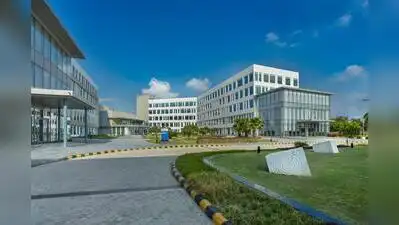
CM Yogi with HCL Tech Chairperson Roshni Nader taking a look at a model showing phase-2 of their campus in Lucknow HCL Campus Lucknow CM Yogi with HCL Tech Chairperson Roshni Nader taking a look at a model showing phase-2 of their campus in Lucknow HCL Campus Lucknow In the mid-1980s, technology in Lucknow had a distinct hum and a glass screen. HCL Tech, which recently completed a decade of operations in Lucknow, has more than 12,500 employees and serves over 150 global enterprises. The company has also announced a Rs 500-crore expansion. Its Lucknow operations include AI-led solutions and digital engineering, while its TechBee programme has trained and employed over 2,200 candidates from Uttar Pradesh.
It was the era of state-owned UPTRON India, when the city’s tech footprint was largely measured in black-and-white television sets, picture tubes and govt-run training institutes. Young graduates who aspired to write computer code had few options at home. Many eventually moved to Bengaluru, Hyderabad, Delhi-NCR and other technology hubs, turning Lucknow into a source of talent rather than a destination for high-end technology work.
InMobi has identified Lucknow as a technology centre, planning to hire around 500 specialists for work involving generative AI, MLOps (machine learning operations), automation and advertising technology infrastructure. Four decades later, that equation is changing. Lucknow’s technology identity is expanding from conventional IT services to software development, artificial intelligence, cloud computing and enterprise technology. Global companies are expanding operations, while the state is building an ecosystem around AI, computing infrastructure, startups and govt technology. The transition is still a work in progress. But the direction is increasingly clear: Lucknow is moving from being a city that hosts technology operations to one that creates and scales technology. BEYOND IT The clearest sign of the shift is the growing presence of large technology companies and the nature of work being done from the city. TCS has established its presence through Awadh Park, working on enterprise software and critical technology systems. Deloitte’s Lucknow operations include IT advisory, technology-led tax solutions and public-sector consulting, while Genpact has been expanding AI-driven enterprise workflows. IBM has added another layer through its Software Lab and AI GovTech Innovation Center, while Sify’s data-centre infrastructure provides computing and connectivity for cloud workloads. For years, engineering graduates from Uttar Pradesh have moved to Bengaluru, Hyderabad, Pune, Gurugram and Noida for careers. The emerging ecosystem in Lucknow is creating opportunities in software engineering, data, product development, consulting and AI that could allow more talent to build careers without leaving the city. The presence of IIM-Lucknow and IIIT-Lucknow, along with the wider academic ecosystem around IIT-Kanpur, adds to talent base. For Lucknow, the opportunity lies in connecting that infrastructure with its growing software and research ecosystem. CAPITAL FLOW
You Can Also Check: Gold Rate in Lucknow | Silver Rate in Lucknow | Bank Holidays in Lucknow | Public Holidays in Lucknow | Lucknow AQI | Weather in Lucknow | Petrol Price in Lucknow | Diesel Price in Lucknow | CNG Price in Lucknow | LPG Price in Lucknow Stay updated with the latest Lucknow news. Download the TOI App.
The first phase is planned over more than 20 acres. The 2026 Data Centre Policy targets more than Rs 2 lakh crore in investment and seeks to position Uttar Pradesh as an AI-ready, high-capacity computing destination. The state cabinet has approved two U-Hubs, including one in Lucknow, with an initial allocation of Rs 100 crore for 2026-27 — Rs 70 crore for capital expenditure and Rs 30 crore for operations. The state has identified more than 100 AI use cases across departments, covering areas such as healthcare, agriculture and public services. HCL Tech’s AI training initiative for 1,000 students in Uttar Pradesh and its TechBee pipeline are examples of companies building local talent around emerging technologies. VISION 2035 The transformation of Lucknow’s technology economy will ultimately be measured not by the number of companies that open offices here, but by what is created here.
The real test by 2035 will therefore be simple: will Lucknow merely host technology — or will it create it?
IT industry executives and technology observers said the changing mix of companies indicated that Lucknow is attracting functions beyond conventional delivery operations, creating the possibility of a wider value chain covering engineering, product development, AI and digital innovation. Technology experts said the availability of graduates had always been one of Lucknow’s strengths, but the challenge was converting that into a pipeline for specialised technology jobs. Retaining senior engineers, product managers, researchers and technology leaders, they said, would matter more than simply increasing headcount if Lucknow is to develop a deeper innovation ecosystem. Technology experts said access to computing power could become an important differentiator for emerging AI clusters, particularly for startups and researchers that cannot independently invest in expensive infrastructure. Govt officials involved in technology sector said the infrastructure push was aimed at creating the computing capacity needed for the next generation of digital applications rather than simply adding conventional IT infrastructure. Startup ecosystem observers said its significance would depend on whether it could bridge the gap between research, prototyping and private investment. Industry executives said govt-backed support could help startups cross the early funding gap, but private capital would ultimately determine whether Lucknow could produce companies capable of scaling beyond the state. Govt technology observers said Lucknow’s position as the state capital could give local technology companies an advantage in developing and testing solutions for large public systems. IT industry experts said successful GovTech applications could also provide a pathway for companies to take products developed for Uttar Pradesh to other states and markets, provided they can demonstrate scalability and commercial viability. Technology industry observers said the shift from conventional IT to AI would require a corresponding change in skills, with growing demand for AI engineering, data science, cloud computing, cybersecurity, automation and other specialised capabilities. Govt officials and industry experts said closer university-industry links would be critical for applied research, internships, specialised training and technology projects based on real industry requirements. Technology experts said the city’s success would depend on whether companies, talent, computing infrastructure, capital, research and govt demand begin reinforcing one another rather than developing as separate initiatives.
RETAINING TALENT For Lucknow, the harder question is whether the city can retain people who make this ecosystem work. Industry observers also point to the possibility of experienced professionals returning as companies create more senior engineering, product and AI roles in the city. COMPUTE POWER AI ambitions require something more tangible than talent: computing infrastructure. The proposed AI City at Vrindavan Yojana is being planned as a technology ecosystem with high-performance computing, AI testing and simulation facilities, incubation infrastructure and flexible workspaces. The state’s data centre push is another part of this strategy. Infrastructure alone will not create technology companies. Startups also need capital, specialised equipment, mentors, industry and markets. This is the gap the proposed U-Hub is intended to address. The Lucknow U-Hub is expected to focus on application-oriented AI, GovTech and applications in healthcare, industry, diagnostics and agri-biotech. For deep-tech ventures, the journey from developing a technology to finding a commercially viable product can be long and capital-intensive. The proposed model is intended to bring together labs, workspaces, investors and industry partnerships, helping move technology from research and prototyping towards commercialisation. Startup support mechanisms in the state include prototype grants, seed funding for deep-tech ventures and a patient-capital window. GOVT TECH PUSH Lucknow has another advantage that most emerging technology clusters do not: it is the administrative centre of one of India’s largest states. That makes govt a potential technology test bed, particularly for applications involving large populations and complex public systems. The proposed UP AI Stack is intended to provide a common digital foundation for such applications. TALENT TEST Infrastructure and investment push will depend on whether Lucknow can build skills required to use them. The state’s AI-skilling plans include AI Kaushal Labs and AI Kendras, while industry-led training programmes are linking students more directly to technology companies and employment pathways. The city has demonstrated that it can host large technology operations and supply a growing pool of trained professionals. The next step is harder: retaining experienced talent, attracting private capital, building research capacity and producing technology products and startups that can scale beyond the state. If the AI City, U-Hub, industry expansion and talent programmes develop as planned, Lucknow could acquire a technology identity distinct from the traditional IT-service model. Industry observers cautioned that infrastructure and investment announcements alone would not make Lucknow an AI hub. The real indicators would be technology products built locally, startups that scale, private investment attracted and high-value engineering and research jobs retained in the city.