
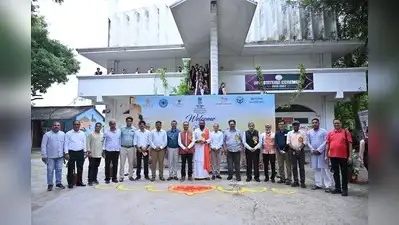
A storytelling session focused on ‘Sant Parampara’ took place on Tuesday at the Sant Atulanand Residential Academy in Holapur, Varanasi. This event was organized collaboratively by the Union Ministry of Tourism’s Varanasi office, the INTACH Varanasi Chapter, the Tourist Guide Association, and the Sant Atulanand Residential Academy. The session aimed to promote cultural heritage and engage the community in discussions about local traditions.
Speakers said that Varanasi has emerged as a distinctive tourism destination in India and has strong potential to establish itself as a global tourism hub. They said that continued focus on infrastructure, tourist facilities, connectivity, branding, promotion and quality tourism products can further strengthen Varanasi’s position as a global destination. Joint director general and regional director (North), Ministry of Tourism, Arun Srivastava; convener, INTACH Varanasi Chapter, Ashok Kapoor; director and principal, Sant Atulanand Residential Academy, Divya Singh; and representatives of various tourism-related organisations and institutions attended the event. They highlighted the city’s spiritual and cultural heritage, living traditions, historic monuments, ghats, culinary traditions and experiential tourism offerings as its key strengths.
Speakers said that hoteliers, tour operators, tourist guides, tourism facilitators, service providers and local residents play an important role in improving visitor experience and ensuring that tourism benefits reach the local community. Such initiatives, they said, would help local stakeholders meet changing tourist expectations and provide better services. Officials said the Ministry of Tourism, under the guidance of Prime Minister Narendra Modi, is focusing on developing globally competitive tourism destinations across the country through a comprehensive approach covering infrastructure, hospitality, service delivery, digital engagement, safety and visitor experience.
The programme also underlined the need for greater community participation and capacity building in the next phase of tourism development. They stressed the importance of targeted capacity-building programmes in tourism education, skill development, service quality, digital literacy and use of modern technology.