
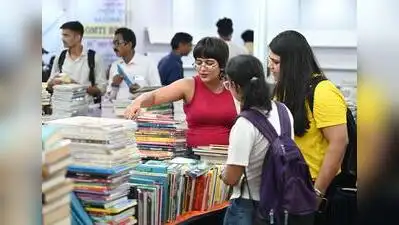
Children’s literature, English classics and even anime-related titles are finding an audience
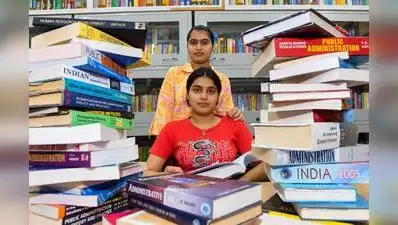
The 5th Gomti Book Festival, held at Lucknow University in Sept, drew around 4.5 lakh visitors and clocked book sales of Rs 2.75 crore, with more than 15,000 children taking part in its literary and cultural programmes. Because young people’s reading lives are no longer confined to the bookshelf, the distinction matters.
And a book fair can become less a place to “buy books” than a place to discover what everyone else is reading. A young attendee said Instagram recommendations led him to buy several classics he had not previously read. Visitors at a book fair in Lucknow Children’s literature, English classics and even anime-related titles are finding an audience Visitors at a book fair in Lucknow Children’s literature, English classics and even anime-related titles are finding an audience There was a time when a child’s room could be identified by its bookshelf. The shelves grew with the child — comics first, then Enid Blyton, Ruskin Bond, school encyclopaedias, Harry Potter, examination guides, perhaps a battered dictionary that nobody threw away. Books occupied physical space. A recommendation can arrive through Instagram . A favourite author can be discovered through a reel. A story can be read on a phone. An audiobook can accompany a morning commute. Yet the story is not simply one of decline. Recent book fairs in Lucknow suggest something more complicated. The city’s National Book Fair at Balrampur Gardens has similarly seen a strong turnout of young readers and families. Sometimes, it is the road that leads to it. A child may discover an author through an Instagram reel, watch a video about a fictional character, see a friend’s book recommendation, look up reviews online and then walk into a bookshop looking for the same title. The screen can be the discovery platform. The book can still be the destination. A recommendation that once travelled through a teacher, parent or friend can now arrive through a social-media feed. WHAT PARENTS CAN DO Unicef recommends making reading a regular part of a child’s daily routine, creating a distraction-free environment by putting away phones and switching off the television, and allowing children to choose books and subjects that genuinely interest them. It also encourages parents to model the habit themselves — children are more likely to develop an interest in reading when they see adults reading at home. Importantly, reading does not have to mean only traditional novels; comics and graphic novels can also be meaningful ways for children to engage with books. On screen time, Unicef India, citing guidance from the Indian Academy of Pediatrics, stresses the importance of age-appropriate limits and balance. Screen use should not come at the expense of sleep, physical activity, schoolwork, hobbies, family interaction and other aspects of a child’s development. Don’t ask: “How many pages did you read? Ask: “What did you like about it? That small change shifts reading from performance to pleasure. WHAT EXPERTS SAY At book fairs, the young reader is easy to spot — sometimes carrying a manga, sometimes a classic, sometimes a book discovered on Instagram, sometimes three books that may or may not all get finished.
Today, the young reader lives in a different ecosystem. SCREEN ISN’T ALWAYS THE ENEMY For today’s young reader, the phone is not necessarily the opposite of the book.
You Can Also Check: Gold Rate in Lucknow | Silver Rate in Lucknow | Bank Holidays in Lucknow | Public Holidays in Lucknow | Lucknow AQI | Weather in Lucknow | Petrol Price in Lucknow | Diesel Price in Lucknow | CNG Price in Lucknow | LPG Price in Lucknow Stay updated with the latest Lucknow news.
It is to make sure they still have a reason to turn the page,” says an expert. Children’s literature, English classics and even anime-related titles have found an audience, while social media is also playing an unexpected role in reviving interest in older books, with some young readers discovering classics through online recommendations before seeking them out at the fair. So perhaps the better question is not: Are young people reading? It is: What does reading look like to them now? BOOK FAIR TEST TOI asked young readers at a Lucknow book fair: “What are you looking for? The answer was not always a book. “Something like the series I saw online. “Something short. “A classic everyone is talking about. “The bookshelf may be smaller. The attention span may be more contested. The phone may never be very far away. But the young reader has not disappeared. Download the TOI App.
Perhaps the challenge for parents, schools and the city is not to make children read the way an earlier generation did.