
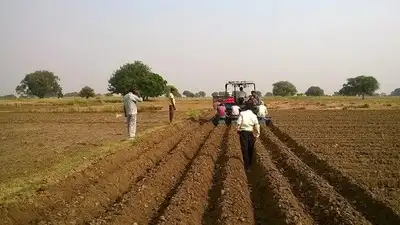
Uttar Pradesh is embarking on an exciting initiative to transform Lalitpur into a pilot Natural Farming District (Representative image)
LALITPUR: The Yogi government is exploring the possibility of developing Lalitpur as the state’s first pilot Natural Farming District.
You Can Also Check: Gold Rate in Kanpur | Silver Rate in Kanpur | Bank Holidays in Kanpur | Public Holidays in Kanpur | Kanpur AQI | Weather in Kanpur | Petrol Price in Kanpur | Diesel Price in Kanpur | CNG Price in Kanpur | LPG Price in Kanpur Stay updated with the latest Kanpur news. A system is being planned to make these products available to local farmers, reducing their dependence on externally sourced inputs while creating additional revenue streams for gaushalas. The Gau Seva Commission also intends to encourage the scientific utilisation of cow dung for manufacturing value-added products. These include cow-dung logs, known as Gau-Kasth, and Panchgavya-based products. Such activities could help gaushalas diversify their income and develop into centres of rural economic activity rather than depending solely on institutional support. The initiative reflects the Yogi government’s broader emphasis on promoting natural farming, improving soil health and encouraging the production of food cultivated with reduced dependence on chemical fertilisers and pesticides. Natural farming can help farmers lower input costs, strengthen the biological health of agricultural land and make greater use of locally available resources. By encouraging the use of organic manure, traditional agricultural knowledge and biological methods of pest management, the government aims to advance a farming system that is economically viable and environmentally sustainable. The focus on natural food also creates opportunities to connect agricultural production with growing consumer interest in food produced through environmentally responsible methods. However, realising this potential requires more than encouraging farmers to change cultivation practices. Farmers need reliable supplies of natural inputs, appropriate technical guidance, credible quality standards and access to buyers willing to pay for their produce. The proposed Natural Farming District model seeks to bring these elements together at the district level. This approach could create opportunities for gaushala workers, rural women, young entrepreneurs and small enterprises engaged in processing, packaging and distribution. It could also strengthen the economic sustainability of cattle-protection institutions by giving them additional sources of revenue. The government is exploring Lalitpur as a pilot district for implementing this integrated approach on a wider scale. The proposed plan envisages bringing together gaushalas, farmers, FPOs and rural entrepreneurs across the district to establish an interconnected system covering natural farming inputs, agricultural production, processing and marketing. Drawing lessons from the pilot, discussions are also underway to consider developing a similar model in one district of each division in Uttar Pradesh in phases. An important element of the initiative is ensuring that natural farming translates into better economic returns for farmers. The proposed framework includes the possibility of developing an organised mechanism for collecting, processing, quality-checking, packaging, branding and marketing agricultural produce. Such arrangements could help farmers move beyond the sale of unprocessed produce and explore opportunities for value addition. Stronger market linkages would also be essential to build consumer confidence and establish a sustainable market for natural food. The larger objective is to transform locally available organic resources into economic assets, help farmers obtain better value from their produce and create new opportunities for rural communities. Download the TOI App.
The idea has emanated from the fact that In Uttar Pradesh, gaushalas are set to become more than centres for cattle protection, emerging as a new pillar of farmers’ prosperity, natural food production and the rural economy. The Yogi Adityanath government is taking steps to develop a self-reliant model by linking cow dung and other organic resources generated at gaushalas with natural farming. The initiative seeks to strengthen the rural economy by creating a practical connection between cattle protection, chemical-free agricultural practices, local entrepreneurship and organised markets. The initiative aims to increase gaushala income, provide farmers with affordable resources for natural farming and establish better marketing opportunities for naturally cultivated produce. By bringing together farmers, gaushalas, Farmer Producer Organisations (FPOs), Self-Help Groups (SHGs) and rural entrepreneurs, the government seeks to create a sustainable economic cycle in which locally available resources support agricultural production and generate additional rural employment. Uttar Pradesh Gau Seva Commission and the National Bank for Agriculture and Rural Development ( NABARD ) are joining hands to discuss the proposed framework. The discussions between the two also explored opportunities to promote natural farming with technical support from the Uttar Pradesh Council of Agricultural Research (UPCAR) and Krishi Vigyan Kendras. A key feature of the proposed model is the integration of gaushalas and farmers through their complementary economic needs. Cow dung and other organic resources available at gaushalas can be processed into natural fertilisers, biological pest-control agents, vermicompost and other agricultural inputs. The proposed Natural Farming District initiative brings together several priorities of the Yogi government: cattle protection, natural food production, reduced dependence on external agricultural inputs, rural entrepreneurship and the creation of local employment. Its success will depend on effective coordination among government departments, scientific institutions, financial organisations, farmers and market participants. Reliable quality assurance, viable business models and sustained demand for naturally produced food will also be essential. By exploring Lalitpur as a pilot and considering a phased expansion across the state’s divisions, Uttar Pradesh is seeking to establish a model in which gaushalas contribute directly to agricultural productivity and rural livelihoods.
Gaushalas are expected to play an important role in this transition by providing a local source of organic agricultural inputs. Instead of treating cow dung merely as waste, the proposed system seeks to convert it into a productive resource for fertilisers, compost, biological formulations and other useful products. FPOs, SHGs, cooperative societies and rural entrepreneurs are expected to play a significant role in this process. These institutions can aggregate produce from small and marginal farmers, facilitate collective procurement of inputs and support activities such as processing, storage, transportation and marketing. Self-Help Groups, particularly those led by rural women, could develop enterprises around compost production, natural farming inputs, food processing and locally made products. This would create opportunities for supplementary household income and self-employment. Financial and institutional support is also being explored to make the proposed model viable. With NABARD’s assistance, credit facilities, financial support and capacity-building opportunities are envisaged for FPOs, SHGs, Joint Liability Groups and eligible farmers. Access to finance would help rural organisations establish small processing units, improve infrastructure and expand their activities beyond the village level. Meanwhile, UPCAR and Krishi Vigyan Kendras are expected to provide technical training to farmers and gaushala managers. Training would focus on scientific methods of natural farming, the preparation and application of organic inputs, biological pest management and the production of gaushala-based products. Appropriate technical guidance will be important to ensure that natural farming practices remain effective, productive and suited to local agricultural conditions. The proposed initiative also considers the potential of renewable energy to improve the financial sustainability of gaushalas. The installation of cow-dung-based biogas and compressed biogas (Bio-CBG) plants at suitable facilities is being explored. These plants could convert organic waste into usable energy while producing by-products that may be utilised in agricultural applications, subject to appropriate technical standards. Linking such enterprises with financial institutions and providing training for their operation could further expand the productive use of resources available at gaushalas.