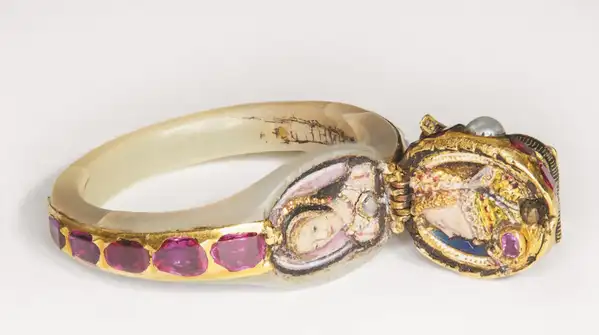
Queen Elizabeth I was extremely explicit about how she wanted to project herself to the world and maintain her reign. She had portraits made and dressed in wedding gowns as befitted her title, presenting the Virgin Queen to the masses. But one small piece of jewellery might have disclosed something more intimate about Queen Elizabeth herself.
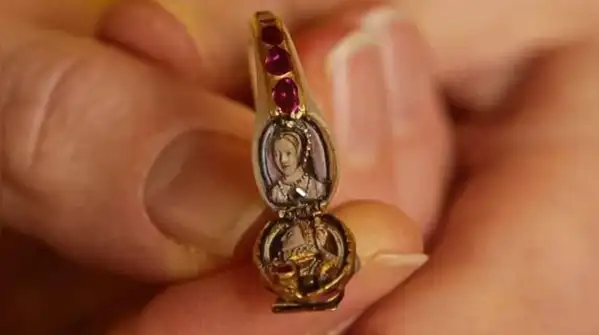
The approximate date of the ring’s creation is around 1575, meaning the queen had been in power for almost two decades by then. (Image Credits: Pinterest) The most remarkable aspect of this ring is not just the diamonds or rubies in it. Their marriage changed England’s politics and religion and led to Elizabeth’s birth in 1533. As revealed within are two portraits, each opposite the other.
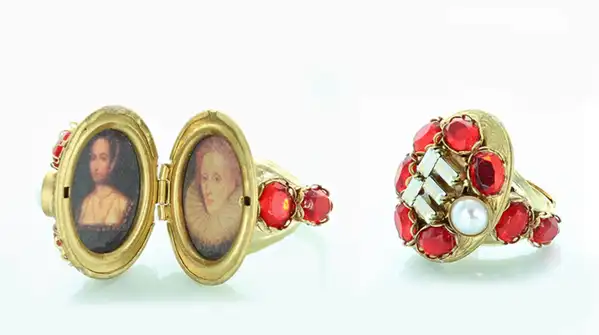
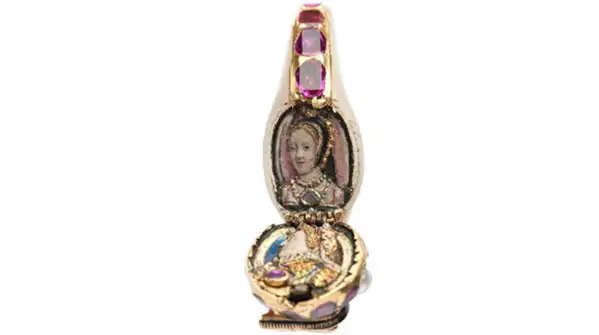
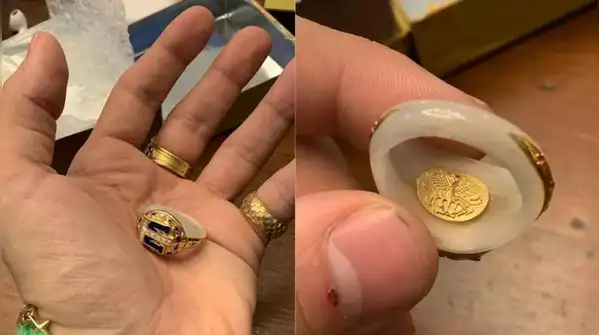
The piece is often named the ‘Chequers Ring’, and it is a Tudor jewel featuring a secret compartment with two tiny portraits, one of Queen Elizabeth I and another of some woman dressed according to the period. The outside has symbols of the Queen, especially diamonds formed in the shape of an “E” and the royal emblem, “R”. For hundreds of years, people have thought that this second woman is Anne Boleyn, the queen’s mother. However, there is no hard evidence proving that this is the case. And this is precisely what is so interesting about the ring. What makes the Chequers Ring remarkable is that it is an extremely rare type of Tudor jewellery from the 16th century. The jewel combines mother of pearl, gold, and rubies with diamonds featured in its design. This jewellery, while appearing as a ring, reveals two tiny portraits inside the hinged bezel. But it is the process followed when the ring is opened. The first one shows Elizabeth I, while the second shows a young woman dressed in the style of the 1530s-40s and wearing a special French hood. Traditionally, it has been considered that this portrait belongs to Anne Boleyn. It is very intimate and shows the perspective of a mother and her daughter wearing this ring. (Image Credits: Pinterest) To understand the significance of the ring, it is important to understand the peculiar circumstances in which Elizabeth spent her childhood. Anne Boleyn became Henry VIII’s second spouse after the annulment of the royal marriage to Catherine of Aragon. The ring is linked with the Chequers collection. Chequers does not operate as a traditional public museum, so the ring cannot be seen whenever visitors wish. That is why the jewel is still not well-known, even though it is one of the most captivating objects preserved from Elizabeth I’s personal collection. It is amazing that after more than four hundred years, the object is present with its portraits that have raised many discussions among historians. (Image Credits: Pinterest)