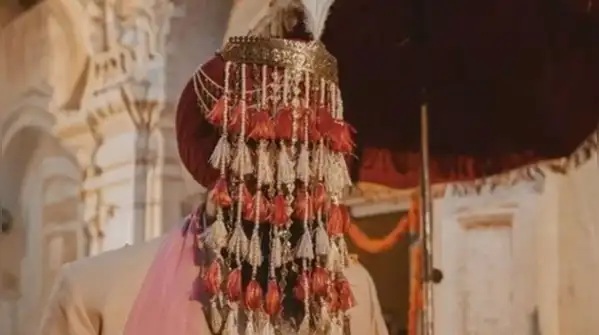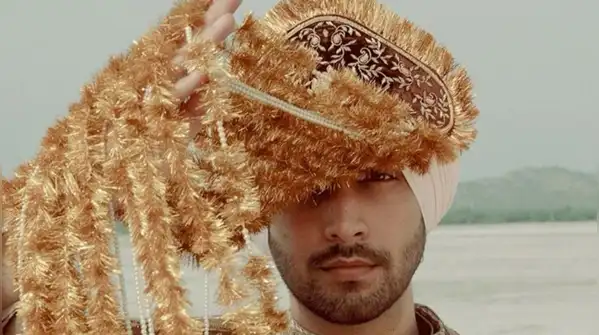
When it comes to an Indian groom’s wedding attire, dressing up goes beyond aesthetic looks. The traditional sherwani, safas, kalgis, and sehra carry significant family legacy and represent regional as well as cultural identity; the attention-grabbing sehra is prominent among them. Though the floral strands, pearls, and ornamental beads dangling in front of the bridegroom’s face appear to serve only a shallow visual purpose nowadays, the custom’s cultural significance runs much deeper. Let’s understand why Indian grooms, mainly in the North, wear this.
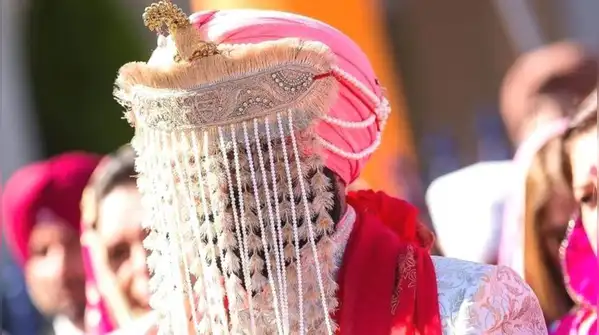
The material of a sehra differs according to culture and style preference. A sehra is the head ornament of Indian grooms, generally worn along with the turban. It consists of strands and tassels hanging partially or completely over the groom’s face. The traditional sehra can be made of natural flowers, pearls, gems, threads, zari, and gold and silver embellishments.
But the journey of the sehra goes way back, long before the social media world came into existence.