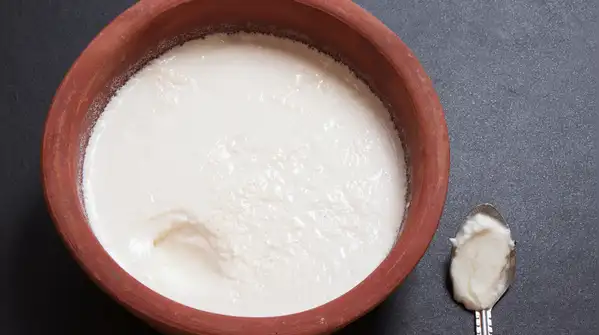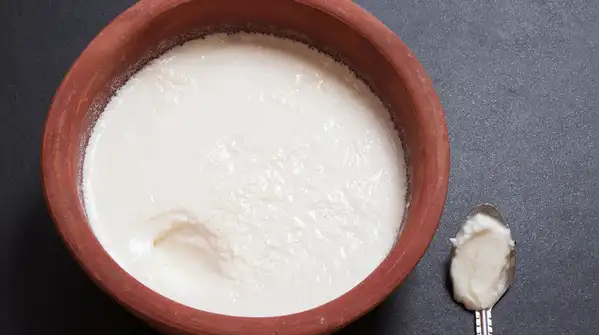
When it comes to curd, we all love a bowl of freshly set thick and creamy delight. From breakfast to dinner, it can be enjoyed in every meal. But in the monsoon that familiar bowl can sometimes take on a sticky, slimy, stringy quality. If you stir it, the curd may look strangely glossy and feel slimy, not thick, creamy and smooth. The change can be surprising, but it is often related to how humidity, temperature and bacterial activity affect fermentation. Knowing what happens during the rainy season can actually help you make fresh firm curd regularly at home. Scroll down to understand the science behind it and ways to prevent it.
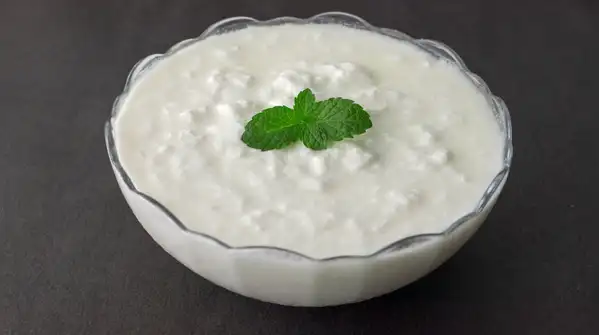
The slimy texture is due to the microorganisms involved in fermentation, according to food science.
One of the easiest ways to improve the texture of homemade curd is to begin by using a good quality starter, according to experts. It is important to note that lactic-acid bacteria convert the lactose in milk into lactic acid, which lowers the pH of milk and causes its proteins, mostly casein to gel. Fermentation can take a different course in warm, humid monsoon conditions. It has been found that certain bacteria or other microorganisms can produce exopolysaccharides (EPS) – long chain substances that can make the curd feel sticky, ropy or slimy. Also, the final texture can be influenced by the amount of bacteria in the starter, the type of bacteria in the starter, the temperature of fermentation and the time of fermentation. If the curd is fermented for too long, it can become softer and stringier. This is why a new starter and controlled fermentation time can be helpful in producing a firmer and smoother batch of curd. It is suggested to use a little fresh, well-set curd, not one that has been sitting in the refrigerator for a few days or has already become too sour. The starter should smell clean and feel normal. Also, the container and the spoon used for setting the curd should also be spotlessly clean. It has been found that even a small amount of contamination or residue can introduce microorganisms that interfere with fermentation and destroy the final dish.