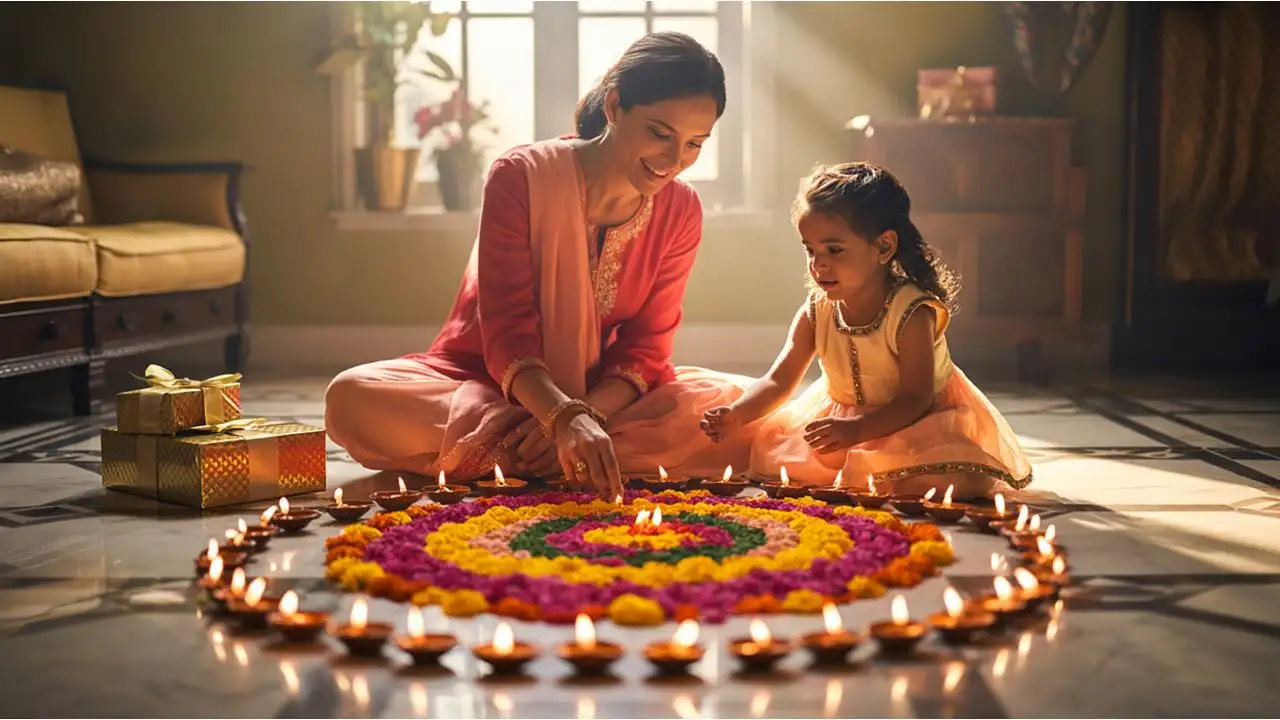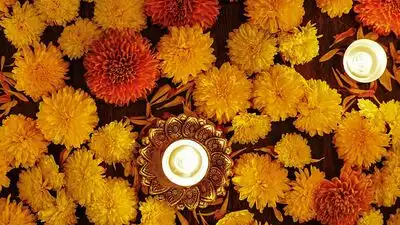
Diwali Decor (Image Credit: Canva)
And if you have unopened gifts from previous years that you genuinely won’t use, consider exchanging or donating them where appropriate.
Who said Diwali decor must involve flowers, candles and an alarming amount of glitter? Diwali is a special time in Indian homes, with every home getting a makeover of its own. The festival to welcome Goddess Laxmi into our homes becomes an excuse to give the entire house a refresh. The madness for diwali decorations is reflected in the bustling markets that are filled with plastic diyas to lanterns to fairy lights. But all the spending on these decorations seems wasteful when they are unable to last even another year. But what if your most beautiful Diwali yet required absolutely no new decor? It can be an opportunity to make it a treasure hunt through your own home. That silk dupatta you wore to your cousin’s wedding can potentially become the backdrop for your diwali decor wall. The brass thali gathering dust can become the perfect plate for a diya arrangement. A zero-waste Diwali isn’t about making your home look less celebratory. It is about giving familiar things a second life and discovering that creativity can be far more charming than a trolley full of identical decorations. Stack a few colourful hardbacks on a side table, place a brass diya holder beside them, and add a small potted plant for a cosy festive corner. Bring out old family photographs in their existing frames, arrange them on a console, and suddenly your home has a conversation starter that no mass-produced decoration can replicate. Have a collection of bangles you rarely wear? Thread a few onto a ribbon and hang them as a temporary decorative accent, or arrange them in a shallow bowl. Old greeting cards can become gift tags, while leftover wrapping paper can be cut into festive paper chains. Marigolds and roses have a way of making any Indian home feel festive. If you already have flowers from your garden or household puja, use them to decorate the entrance, arrange them around a rangoli or place them in bowls around the living room. Diwali Decoration (Image Credit: Canva) Reuse sturdy strings and ribbons from previous celebrations to hang garlands, rather than buying plastic alternatives. Mango leaves, where available and traditionally used, can also lend a fresh touch to a doorway. Once the celebrations are over, separate suitable flowers and leaves for composting. Avoid mixing them with plastic threads, metallic embellishments or synthetic decorations. If you have a home composting setup, this is a lovely way to return organic material to the soil. Diwali gifting has a packaging problem. A small box of sweets arrives inside a larger box, wrapped in paper, tied with ribbon and placed in a bag that could probably accommodate a microwave. This year, use what you already have. Wrap gifts in clean fabric, reuse attractive paper bags, or decorate old cardboard boxes with leftover paper and twine. A scarf can double as wrapping and part of the gift. Glass jars can hold homemade snacks, provided they are clean and suitable for food storage. A little imagination can make even the simplest gift feel personal. Besides, the recipient is far more likely to remember your homemade nankhatai than the three layers of packaging it arrived in. You use AI every day. Now get your AI Quotient. Take the AIQ test Get the latest Lifestyle News and more. Download the TOI app.
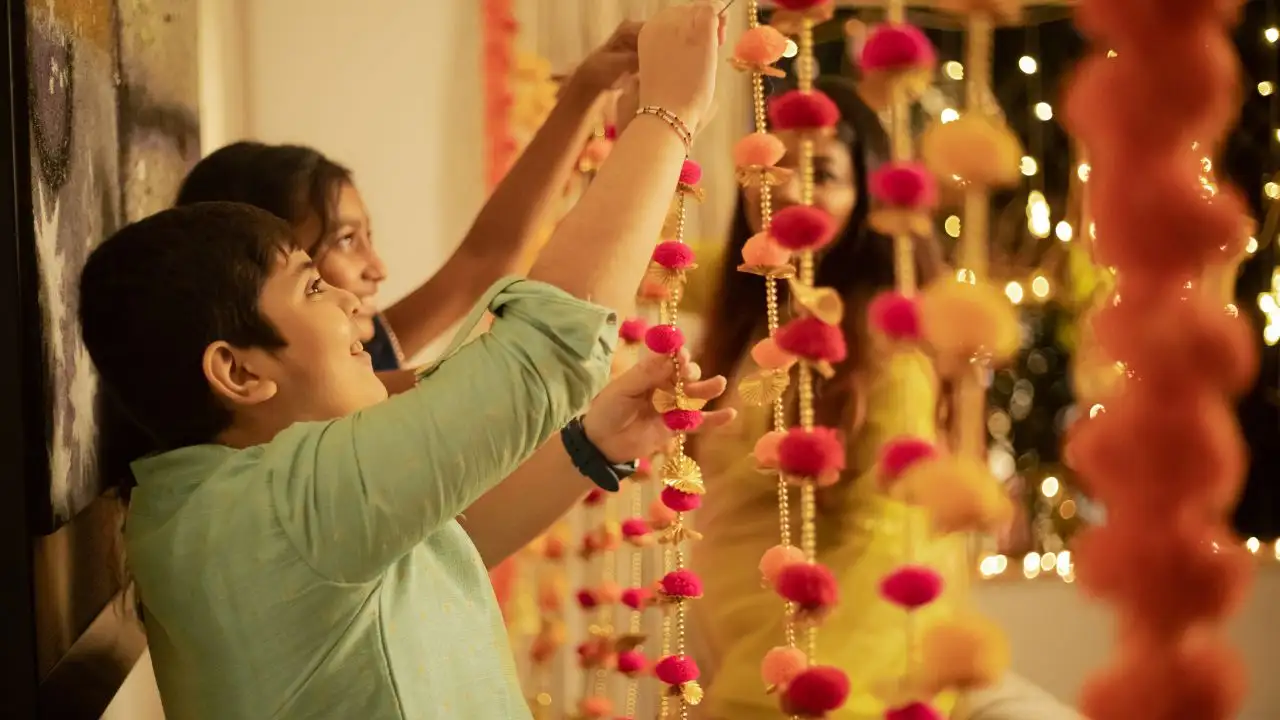
Before buying colourful buntings or decorative fabric, raid your wardrobe. Old dupattas, sarees and scarves can instantly transform a room. Drape a bright Bandhani dupatta across a console table, hang a silk saree behind the puja corner, or layer contrasting fabrics over cushions for an easy festive makeover. Even a colourful cotton bedsheet can work as a backdrop for family photographs or a sweets table. A string of warm-white LEDs can make a balcony, bookshelf or window look wonderfully inviting. Wrap them around an existing curtain rod, weave them through a sturdy indoor railing or arrange them around a mirror. Reuse lanterns, candle holders and decorative stands you already own to create layers of light. If you have glass jars, clean and dry them before using them as holders for battery-operated LED lights. Decorate the outside with reusable ribbons or fabric ties rather than permanent glue and glitter.
Before declaring last year’s lights outdated, plug them in and check whether they still work safely.
The best part? Once the celebrations end, fold everything away and bring it back next year. No peeling glitter, no bin bags full of plastic décor, no post-Diwali regrets. Your kitchen is practically a colour treasure. Rice flour, turmeric, coffee powder and pulses can create a beautiful, earthy rangoli without synthetic glitter or plastic embellishments. Diwali rangoli (Image Credit: Canva) Use rice flour for white outlines, turmeric for yellow, and coffee powder for warm brown accents. Arrange flower petals and leaves into simple geometric patterns, paisleys or concentric circles. A handful of lentils can add texture, while a few marigold petals lend that unmistakable Diwali glow. This is not something new but just bringing back the tradition of making beautiful rangolis from what we had at home, as our grandparents used to do. Some of the most elegant festive decorations are already hiding in plain sight. Bring out the brass urli, copper lota, steel thali or silver-plated bowl that usually makes an appearance only during special occasions. Fill a wide bowl with water, float a few flower petals and arrange it on a stable surface away from electrical connections. Surround it with existing clay diyas or place the bowl beside a small arrangement of flowers. If you have a traditional brass lamp, let it take centre stage. Even an assortment of mismatched metal bowls can look beautiful when grouped together at different heights. The trick is to create a deliberate arrangement rather than lining everything up as if it were waiting for inspection.