
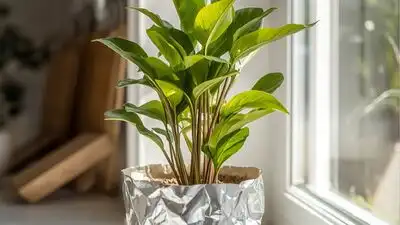
Do you often feel disappointed after bringing a plant home and looking at its deteriorating condition after a few days? Then fret not, as we have got in your back with a simple hack to keep plants healthy and thriving with this easy tip. No wonder, keeping indoor plants healthy takes a surprising amount of effort. In fact, a lot beyond routine watering and using decent potting soil, and one needs to constantly have to track sunlight and figure out how to get enough light to every leaf. While plenty of quirky home remedies circulate among plant lovers. But you will be surprised to know that by placing ordinary kitchen foil around the planted pots, you can actually change the game for your plants. Adding a bit of foil creates an inexpensive protective shield for your containers. It targets three common indoor plant issues at the same time by slowing down soil drying, bouncing extra light toward shaded foliage, and building a physical obstacle for surface pests.
Three key benefits First, foil helps preserve precious soil moisture. Potted soil almost always dries out from the top surface downward. This forces you to water more frequently, which can end up washing vital nutrients right out of the pot. Covering parts of the soil surface locks in moisture, giving roots a chance to stay hydrated for much longer between waterings. Second, the reflective surface directs ambient daylight up into the underside of the canopy. This works wonders for houseplants sitting on dark windowsills or tucked away in low-light corners where sun exposure is limited throughout the day. Finally, foil creates a slippery barrier that pests hate. Small crawling bugs like ants struggle to traverse the smooth metal surface along the rim of the pot, making it harder for them to reach vulnerable stems and foliage. The pest control myth
Getting good results requires thoughtful placement so you do not accidentally smother the root system. Start by cutting standard aluminum foil into small, manageable strips rather than using one solid sheet. Lay these strips loosely around the inner rim or over specific sections of the soil, taking care to keep the metal from touching tender stems or soft leaf tissue. Most importantly, leave plenty of open soil visible. Leaving open gaps allows oxygen to reach the roots and lets you easily check moisture levels with your finger before watering. Avoiding heat and moisture damage
Reflective foil is not a magic pest remedy that will eliminate bugs on contact. It acts solely as a passive physical barrier that makes moving across the container difficult for surface crawlers. If a bug colony has already set up shop in your soil or on the leaves, wrapping the pot will not solve the problem. You still need to treat active infestations directly with standard pest management solutions rather than relying on foil alone. How to apply foil correctly Moderation is key when working with reflective materials around plants. If you place bright foil under harsh, direct afternoon sunlight, the concentrated glare can reflect heat directly onto the bottoms of the leaves and cause serious heat damage. Covering the soil entirely creates another set of problems. Trapping dampness completely deprives the roots of necessary dry periods, which can lead to root decay. Leaving exposed areas of soil keeps your plant properly oxygenated while still letting you enjoy the moisture-saving and light-boosting perks of the technique. Pay close attention to how your greenery reacts over the first few days. Making quick adjustments to the foil strips will help you hit the perfect balance between light reflection and healthy soil airflow. You use AI every day. Now get your AI Quotient. Take the AIQ test Get the latest Lifestyle News and more. Download the TOI app.