
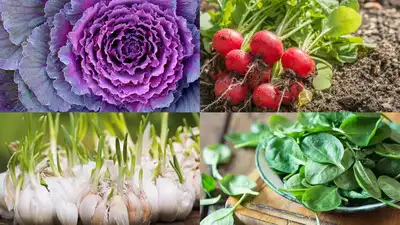
As summer crops wind down and empty patches start opening up across the vegetable bed, September turns out to be a genuinely underrated month for gardeners rather than the season-ending slowdown it’s often mistaken for. A handful of hardy, cool-loving vegetables actually thrive when sown right now, some ready to harvest within weeks, others quietly building strong roots before winter sets in so they can burst into growth again come spring. Cooler temperatures even work in your favour with several of these crops, concentrating natural sugars in the leaves for a noticeably better flavour than their summer counterparts ever managed. Here are seven hardy vegetables worth getting into the ground this September.
September is widely considered the ideal window for planting garlic, since fall planting gives the bulbs time to establish a solid root system before winter dormancy sets in, setting them up for vigorous growth and a proper harvest come next summer. Plant individual cloves about six inches apart in well-draining soil, in a spot that gets plenty of sun. If you want the fastest possible payoff from a September planting, radishes are genuinely hard to beat. Beyond being the last realistic window for summer radish varieties, this month also opens up the option of sowing hardy winter radishes specifically bred for a colder-weather harvest. Sow seeds an inch or two apart into shallow drills around half an inch deep, keep the soil consistently moist, and you’ll have roots ready to pull within just a few weeks, making radishes the perfect crop for filling small, awkward gaps left behind by summer plants. Few vegetables handle cold quite as gracefully as kale, which genuinely becomes more cold-hardy and flavourful as temperatures drop rather than struggling against the chill. Planted in September, kale can provide a steady, continuous harvest right through fall and, in milder climates, well into winter itself. It’s a low-maintenance, nutrient-dense addition to any garden, and unlike more delicate greens, a light frost tends to actually improve its taste rather than damage the plant. Lettuce genuinely prefers cooler weather over the heat of summer, making September an ideal sowing window rather than a compromise. For the best results this late in the season, cold-hardy romaine or loose-leaf varieties tend to grow faster and handle dropping temperatures considerably better than more delicate summer types. Sowing a mix of varieties adds welcome texture and colour variation to salads through the cooler months, and successive small sowings every couple of weeks help keep a steady supply coming rather than one big harvest all at once. For gardeners thinking a season ahead, fava beans planted in September develop their root systems quickly before going fully dormant over winter, then spring back into vigorous growth the moment temperatures rise again. It’s worth noting these do best in well-draining soil, gardens that tend to get waterlogged or face strong winter winds are generally better off waiting until spring to sow instead. Peas prefer cooler conditions anyway, often struggling in summer heat, so this shift into autumn sowing genuinely plays to their strengths rather than working against them, giving you a fresh, crisp harvest right as most other summer crops are finishing up.
It takes patience, this isn’t a quick crop by any measure, but few things beat pulling up a bulb of homegrown garlic you planted nearly a year earlier. That early head start typically means an earlier, more established crop come spring compared to beans sown fresh in the new year. Fast-maturing pea varieties sown in September can still deliver a genuine late fall harvest before the coldest weather truly sets in, making them a great option for gardeners who want results without the long wait fava beans or garlic demand.
This fast-growing leafy green can be sown directly into the soil now, with your first harvest ready in as little as 30 days, and hardy winter cultivars will keep producing pickable leaves right through until spring. Few vegetables reward a September sowing quite as quickly as spinach does. Sow seeds about an inch deep, thinning seedlings to roughly five inches apart once they emerge, and pick a few leaves at a time from each plant rather than harvesting the whole thing at once, this keeps the plant productive for months rather than just one big cutting.