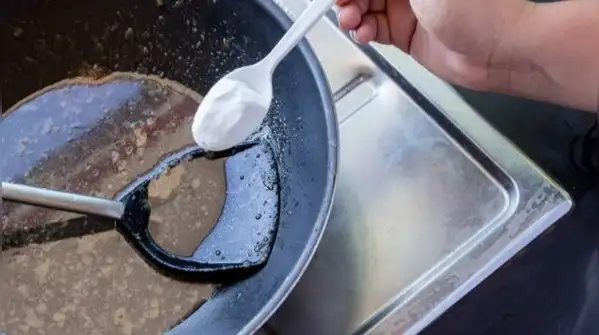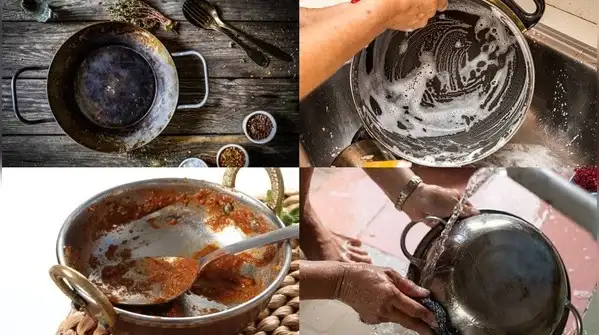
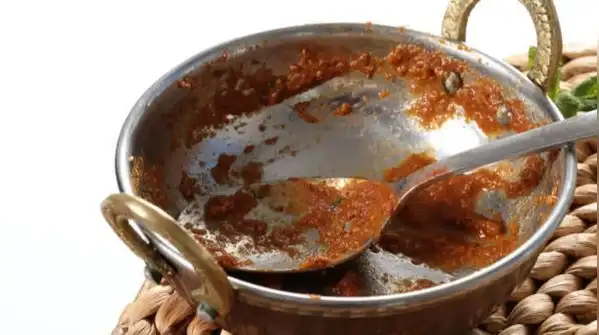
The kadai is the workhorse of the Indian kitchen, from sabzi and frying to the occasional halwa. It is also the first utensil to look neglected, with burnt black patches on the base, a sticky brown film inside and dark rings on the sides that no amount of scrubbing seems to shift. Before reaching for harsh chemical cleaners, it helps to know that a few ingredients from your pantry, such as baking soda, lemon, vinegar and salt, can do the job gently and cheaply. Here is a simple five-step guide to bringing your kadai back to life.
For burnt-on food and greasy residue, fill the kadai with enough water to cover the stained area, add two tablespoons of baking soda and a few drops of dish soap, and bring it to a gentle boil for 10 to 15 minutes. Cut a lemon in half, dip it in salt and rub it over the stain in circles, or boil a mixture of equal parts water and white vinegar in the kadai for 10 minutes. The right method depends on what your kadai is made of. Stainless steel, aluminium, iron, hard-anodised and non-stick pans all react differently. Stainless steel and aluminium handle most home remedies well, but acidic ingredients such as lemon or vinegar can darken aluminium if left on too long. Cast iron should not be soaked for long, and non-stick pans must never be scrubbed hard. Cool the kadai completely and wipe off loose oil and food bits before starting. Turn off the flame, let it cool and leave it to soak for another hour. The baking soda loosens the burnt layer, so it lifts with a soft scrub instead of a fight. Avoid this method on cast iron, which can lose its seasoning. Dark rings and dull patches on steel respond well to acid. Let it cool and scrub with a soft sponge. These work best on stainless steel and should be rinsed off quickly. Avoid long contact on aluminium and iron, as acids can discolour or corrode the surface. This article is intended for general informational and household purposes only. Results vary with the material of the kadai, the type of stain and individual technique. Always follow the manufacturer’s care instructions and test any method on a small area first. Avoid acidic cleaners on aluminium and cast iron, and avoid abrasive scrubbers on non-stick surfaces. Handle hot water and pans with care, wear gloves if you have sensitive skin, and keep cleaning agents away from children and pets.