

AI representation/ChatGPT
If a child repeatedly acts as a messenger between parents or feels responsible for keeping one parent from finding out what the other has said or done, the adults should address the underlying conflict themselves. “Please don’t tell Mum. “Dad doesn’t need to know. A child may make these requests after getting an extra treat, breaking something by accident or sharing information they are not ready for the other parent to hear. It can leave a parent wondering whether the child is simply looking for privacy, trying to avoid trouble or learning how to play one parent against the other. But a request to keep a secret can also reveal something about how a child understands trust, relationships and the rules within a family. Parents should also make clear that surprises and ordinary private feelings are different from secrets involving someone getting hurt, feeling unsafe or being asked to hide inappropriate behaviour. Children need to know they can always tell a trusted adult when something feels wrong, even if someone has asked them not to speak about it. You use AI every day. Now get your AI Quotient. Take the AIQ test Get the latest Lifestyle News and more. Download the TOI app.
22 Sept 2026 | 15:04 Photo: Canva A study published in Child Development examined how children between the ages of four and 12 handled secrets for a parent. A 2006 study examined 276 students in ninth and 12th grades and their parents. A child asking one parent to keep something private may therefore be responding to an expected reaction rather than deliberately trying to create conflict.
Researchers then examined whether the children revealed what had happened when asked about it.
For a child who says, “Don’t tell Dad I told you this,” the request may be an early attempt to understand who gets to know what. Psychological research suggests that children gradually learn that information can be shared with some people and withheld from others. When a child asks one parent not to tell the other, they may be exploring that distinction. However, the meaning of the request depends on the child’s age, what the secret involves and why they want it kept. In the experiment, a parent broke a toy and asked the child to promise not to tell anyone. The study found that secret-keeping increased with age. Children who kept the secret during direct questioning also tended to receive higher parental ratings of executive functioning, which includes skills involved in controlling behaviour and managing information. The findings show that keeping a secret can involve several abilities, including understanding what another person knows, remembering a request and deciding whether to disclose information. They do not mean that children should be encouraged to conceal things from one parent, or that keeping a secret is always a sign of maturity. It may also reflect embarrassment, fear of a reaction or a wish to have some control over a situation. Children do not necessarily expect both parents to respond in the same way. One parent may seem more likely to listen calmly, while the other may be associated with stricter rules or a stronger reaction. Research on adolescent-parent relationships has found that trust and parental acceptance are associated with how willing young people are to share personal information. The researchers found that adolescents disclosed more to mothers than fathers, particularly about personal matters. Greater trust, perceived obligations to disclose and parental acceptance were associated with more disclosure and less secrecy. The participants were teenagers, not young children, so the findings cannot directly explain every request made by a younger child. They do, however, show that what children share with each parent can depend on how they understand the relationship. If the request happens repeatedly around the same kinds of problems, parents can use it as an opportunity to understand what the child is worried about.
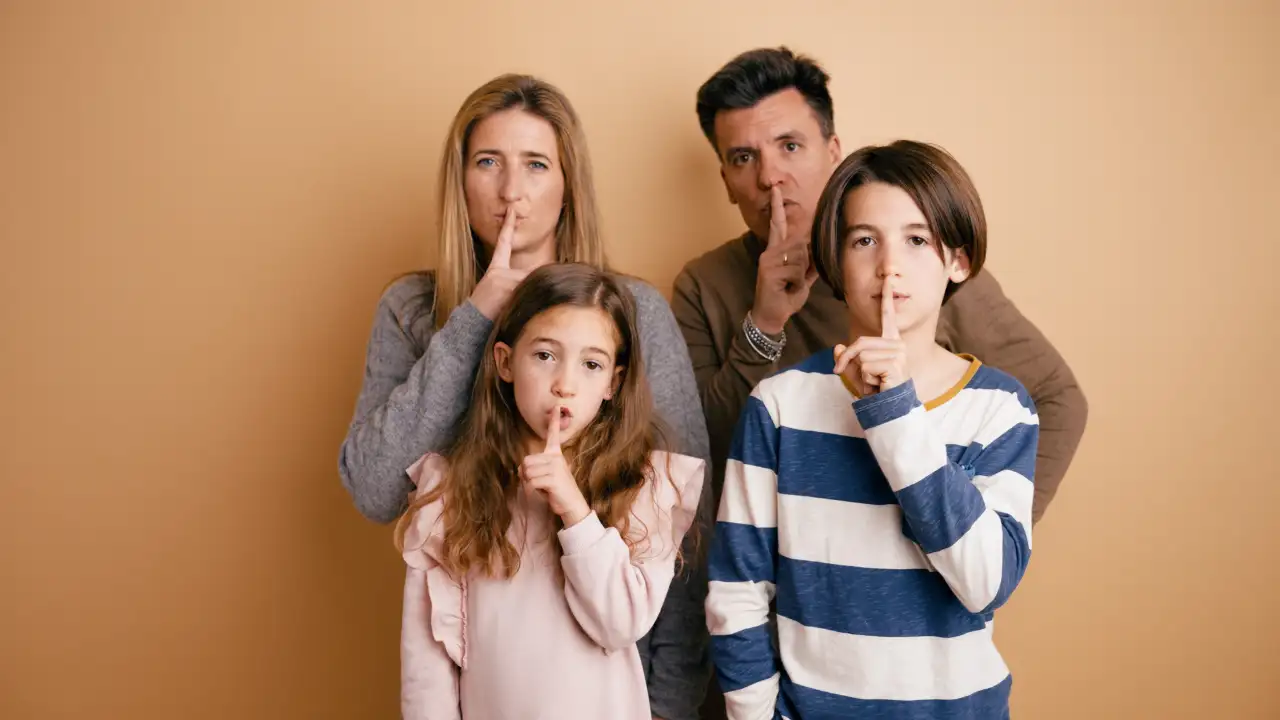

When does privacy become a problem?
A 2022 study in the Journal of Youth and Adolescence examined how 244 adolescents managed information with parents, siblings and close friends. Because they fear being shouted at, punished harshly or blamed, the concern is different when a child repeatedly hides important information.
If a child says, “Please don’t tell Mum,” a parent does not have to agree immediately or dismiss the request. “Would you like me to help you tell her?” Photo: Canva Not every secret is harmful. A child might want to keep a birthday surprise from the other parent or share an embarrassing worry privately before deciding whether to discuss it with the family. It is also worth paying attention if one parent asks the child to conceal adult disagreements, money problems or relationship issues from the other parent. In such situations, the child may feel caught between adults or responsible for managing information that should not be their burden. The researchers found that young people used nondisclosure more often for personal information, such as their thoughts and feelings. Their reasons for withholding information from family also varied with age. A calm response can help uncover the reason behind it. Parents can try asking: “What makes you worried about Mum knowing? “Are you afraid of getting into trouble, or is this something you want to keep private?