

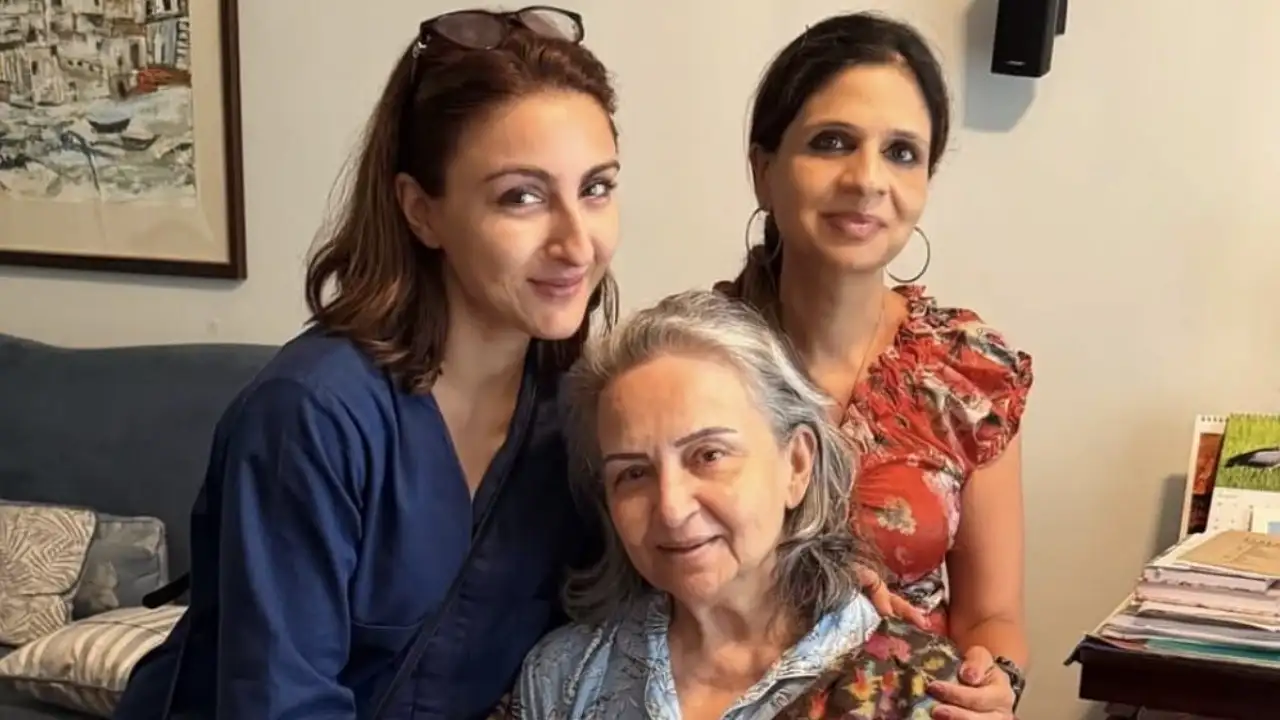
Soha Ali Khan with her mother, veteran actress Sharmila Tagore
Going for surgery is never an easy decision, especially for someone at the age of 81. Sharmila Tagore had opened up about the incident in 2023 on Koffee with Karan , explaining why she couldn’t be a part of his movie Rocky Aur Rani Kii Prem Kahaani . Because she insisted on being cut open, a lot of people said it was unnecessary, “It is very hard to diagnose early, and in her case, it was stage zero, and. Because doctors may not always know which lesions are likely to grow or spread and which could simply be monitored, at stage zero, the tissue may not be cancerous, but the risk can be significant.
She insisted, and it was only at that stage on the table that they said it was malignant and managed to cut it all out, which was one of the best-case scenarios for somebody with lung cancer,” Soha revealed on the podcast.
Image source- Canva According to the National Cancer Institute, USA, stage zero is when abnormal cells are found in the airways of the lungs and have not spread to the deeper lung tissues. Yet veteran actress Sharmila Tagore insisted on going for surgery after being diagnosed with lung cancer, even though many people felt that it was unnecessary. Recently, Soha Ali Khan , on her podcast All About Her , talked again about her mother’s surgery. She mentioned that the veteran actor was diagnosed at stage zero, yet insisted on undergoing surgery. If not identified, they may turn cancerous over time. In the case of Sharmila Tagore, her daughter explained how her decision to undergo the procedure proved significant. It was only on the operating table that doctors found the tissue to be malignant, and it was removed in time. This raises a serious concern about the diagnosis of cancer cells and why doctors may recommend surgery at a very early stage. This is relevant to the case of Sharmila Tagore. The more shocking part is that many early-stage lung lesions are asymptomatic, i.e., they do not cause any symptoms or warning signs. So, you can’t rely on your body to tell you that the tissue is turning cancerous. This is why routine health screenings are important. Some early detections happen during routine checkups at the doctor’s office.
Image source- Instagram/@sakpataudi One of the encouraging aspects of Sharmila Tagore’s recovery was that she did not require chemotherapy after the affected tissue was removed. As per CION Cancer Clinics, many patients find that their anticipation of chemotherapy worsens as the course progresses, even when the cycles themselves stay the same. Some may feel sick or anxious the moment they smell the treatment unit or even see the building. Repeated hospital visits, the fear of side effects and the disruption of everyday routines can make someone emotionally exhausted, to the point where a life-saving treatment journey becomes more difficult than the disease itself. This is why emotional support and medical guidance remain important throughout the process. Nevertheless, chemo remains an important and potentially life-saving treatment. Whether a patient needs it depends on the type of cancer, its stage and the findings from the examination of the removed tissue. Sharmila Tagore’s experience shows how her decision to undergo surgery helped save her life. Not only this, but her case also serves as a reminder that every diagnosis is different. Understanding the condition, discussing treatment options with doctors and making informed decisions can help patients navigate a very difficult and exhausting journey. What the patient needs most is constant support from her loved ones. You use AI every day. Now get your AI Quotient. Take the AIQ test Get the latest Lifestyle News and more. Download the TOI app.
This was previously the reason why many people felt that surgery was not required for the veteran actor, as the malignancy was not determined until she was in the operating room. Many people dread chemo, sometimes even before the treatment itself begins.
If doctors find any suspicious lump in the body during a checkup, the next step is to investigate further. Depending on the type of cells and the growth, the next step is determined. This may require imaging tests such as CT scans or even a biopsy, in which a small part of the tissue is taken to a lab for examination under a microscope. The biopsy may reveal the type of tumour and whether it is malignant or abnormal, depending on which doctors can suggest surgery.